
A wall of olive oils and balsamic vinegars is inviting until you have to choose. Do you start with a familiar flavor, try the strongest oil, or buy the pair the shop recommends? Your first visit becomes more useful when you arrive with one ordinary meal in mind.
Tell the staff what you want to use the product for and which flavors you already enjoy. Ask for a small comparison, explain what you like about each option, and choose only the bottle or pairing you can see yourself using. You can buy an oil without a vinegar, ask for another suggestion, or leave without buying when nothing fits.
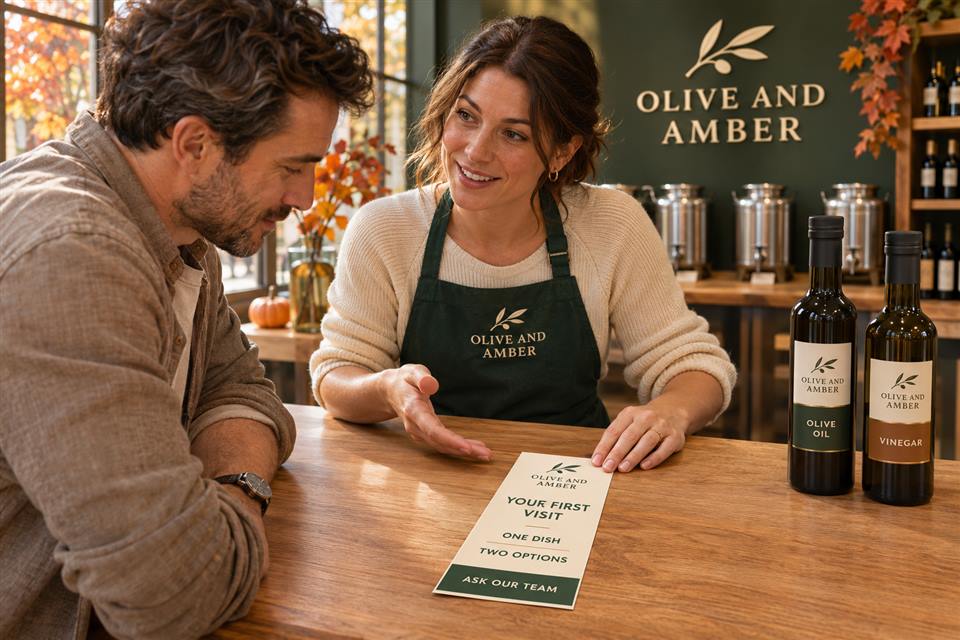
Start with the question behind the visit
In a January 2024 olive-oil discussion, a newcomer wanted a way to discover their preferences before investing in expensive bottles. Replies suggested tasting opportunities, while also questioning whether every local shop offered the same quality. The thread is an individual experience, not evidence that one retailer or price bracket is best.
That is a useful distinction for a first visit: discovering what you enjoy is a different task from finding the most impressive bottle. A long list of awards or an unfamiliar flavor name does not tell the staff what you want for Tuesday’s dinner. Your usual meals give them a more practical starting point.
Before you go: check the tasting format
Do not assume that every shop uses the same arrangement. Figone’s tasting page, for example, distinguishes complimentary walk-in showroom tastings from a reserved experience with a dedicated staff member. Those are different visits, even at the same business.
Olive ’n Vinnie’s Taste & Learn page describes everyday sampling as well as featured Saturday tastings, and offers guidance based on how customers cook. Use such pages to understand the format, then check the particular shop’s current hours, booking requirements and any charge before making a special trip.
A group visit, a guided event and a quick shopping stop may need different arrangements. Ask which option suits you instead of expecting an event-length explanation during a busy walk-in purchase.
Give the staff one dish and one preference
“What is your best olive oil?” is hard to answer usefully. Try a request that narrows the choice:
“I want something for the green salads I already make. I prefer savory flavors and do not usually like sweet dressings. Could you help me compare two options?”
You have supplied a use, a preference and a manageable starting point. Two is a proposed conversation size, not a technical tasting limit. Staff may suggest a different comparison depending on the products and the visit.
If you do not know the vocabulary, use everyday language: “That feels too intense for me,” “I prefer the less sweet option,” or “I like the citrus note, but I am not looking for heat.” You do not need to perform an expert assessment to express a preference.
Compare for enjoyment, without declaring a quality grade
The North American Olive Oil Association’s tasting guide distinguishes professional sensory panels from informal tasting. Its consumer guidance encourages attention to aroma, flavor and intensity. A shopper can describe those impressions without claiming to certify an oil’s grade.
Visit California’s olive-oil tasting article suggests moving from lighter to stronger oils and emphasizes personal enjoyment. Ask the host to guide the order. The strongest option is not automatically the best match for your taste or intended dish.
If the comparison stops being clear, pause and tell the staff. You do not have to work through the entire display to justify a visit. A smaller, understandable comparison can be more useful than leaving with several bottles you cannot distinguish.
Treat a pairing menu as a suggestion
An oil-and-vinegar pairing is an option, not a requirement to buy two products. The Olive Barrel’s pairing list offers several possible partners for some flavors. That is a starting point for a conversation rather than a universal rule about what everyone should enjoy.
Tell the staff whether you want an oil alone, a vinegar alone, or a combination for a specific use. If a proposed pairing is available to sample in that shop’s format, ask to compare it before deciding. Liking a bottle’s name is different from liking the suggested combination.
When you already have a vinegar at home, you can bring its exact name or a photograph of the product information and ask about an oil to consider alongside it. Without the actual combination available, treat the recommendation as a suggestion. The staff cannot confirm your experience of an untried pairing.
Two first visits, two sensible purchases
The following examples are fictional shopping decisions. They are not tested recipes, customer testimonials or offers from the shops cited above.
Elena wants an oil for her usual green salads
Her request: savory rather than sweet, with no need to replace the vinegar she already likes.
The comparison: staff help her compare two plain oils. She prefers the gentler-tasting one. A fruit-flavored vinegar sounds interesting, but it does not meet her original request.
Her decision: Elena chooses the oil she preferred and declines the extra vinegar. She asks staff to confirm the exact bottle and available size before purchasing. One useful bottle meets her goal.
Marcus wants to explore a citrus-led pairing
His request: he enjoys citrus flavors and wants a new combination to consider for the salads he already makes.
The comparison: the host suggests two combinations available in that day’s tasting. Marcus likes one and finds the other too sweet for his taste.
His decision: he chooses the two named products from his preferred comparison, confirms their identities with staff, and leaves the other suggestions for another visit. If neither combination had suited him, asking for an alternative or waiting would also have completed the decision.
These visits end differently because the shoppers have different goals. Neither needs an entire collection. Before checkout, make sure the bottle in your hand is the specific product you selected, rather than a similarly named neighbor on the shelf.
Questions first-time visitors ask
Do I need to buy an oil and vinegar together?
No. A suggested pairing does not make a two-bottle purchase necessary. Explain whether you want one product or a combination, especially if you already have something you enjoy at home. Choose the products that meet your purpose.
Is the strongest olive oil always the best choice?
No. Intensity and your preference are separate questions. Ask for a comparison and describe which option you enjoy for the use you have in mind. An informal preference is not a professional quality grade.
Do olive oil tasting rooms need a reservation?
It depends on the business and the experience. Walk-in sampling, dedicated guided sessions and group events can have different arrangements. Check the chosen shop’s current page or ask it directly about booking, hours and charges.
For shop owners: make the first question easy
A staff greeting or a simple existing sign may be enough. When visitors hesitate at a large display, an optional printed prompt can invite a useful conversation without ranking every bottle or promising that a pairing will suit everyone.
Your first visit
One dish
Two options
Ask our team
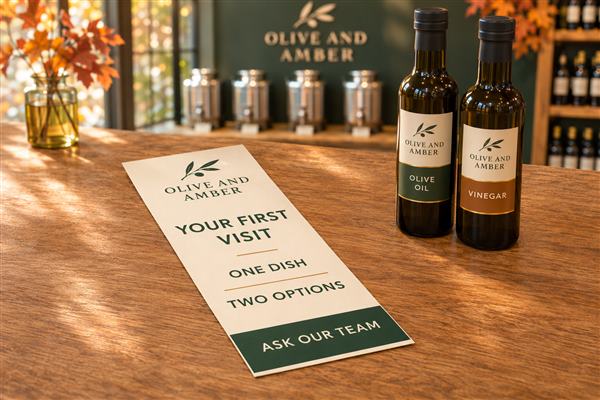
A compact printed guide to starting the conversation
DecentCustom’s custom rack cards are listed at 3.74 × 8.27 inches, with full-color printing, standard 14pt stock and a premium 16pt option. The product is a flat paper card.
Glossy is listed as the default finish; confirm the stock, finish, artwork and quantity for your design. The matte appearance in these illustrations is a concept. Bottles and shop fixtures are props, and a separate display holder is not part of this proposed card design.
Explore custom marketing materials for other printed formats, or browse custom products from DecentCustom for wider retail needs.
A good first visit does not require expert vocabulary or a large purchase. It needs a clear purpose, an understandable comparison and the freedom to choose what you will actually use.