
Two jars sit on the honey-shop shelf. One flows when the jar is tilted; the other looks thick and pale. The useful buying question is not which looks more impressive. It is which product gives you the texture you want, and what is actually in that particular jar.
Creamed honey is honey with a controlled, fine crystal structure that gives it a smooth, spreadable consistency. Liquid honey has a flowing consistency. Creamed describes a form of honey, rather than a requirement to add cream. Choose by the texture you want for your usual use, then check the specific product’s description and ingredients.
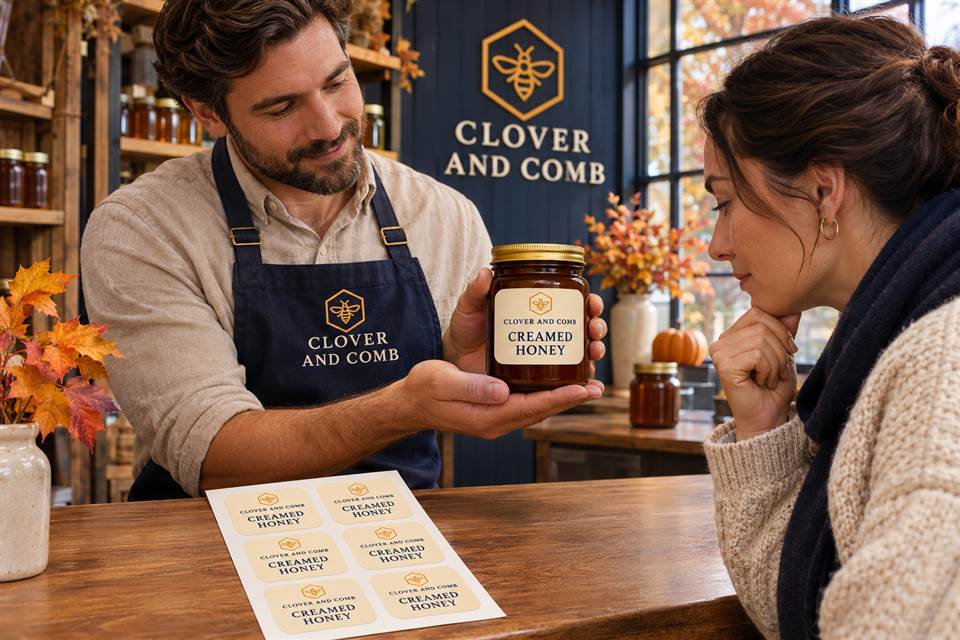
Why appearance alone leaves questions unanswered
A shopper in a July 2025 honey discussion bought a thicker, whiter jar after seeing it beside a darker liquid one, then asked what the difference meant. The question captures a real shopping uncertainty. The replies are individual opinions, not proof of the identity, processing or properties of every similar-looking jar.
At the shelf, separate three questions: What form is it? What ingredients does it contain? What texture does this product have? A pale appearance does not answer all three. Read the description and ask the seller when the name is unclear.
Fine crystals create the creamed texture
Betterbee’s creamed-honey guide explains controlled crystallization and distinguishes a smooth spread from honey that has become difficult to scoop. That distinction matters: creamed honey is crystallized, but the word crystallized alone does not promise a smooth, easy-to-spread product.
The ExtensionAUS guide to cream and candied honey describes a range from fine to coarse grains and emphasizes spreadability. For a purchase, ask about the actual texture instead of treating every firm jar as the same thing.
A useful question is, “Is this a smooth creamed honey intended for spreading, or is it a more firmly set product?” You do not need to identify crystal size through the glass. The producer’s description, and any sampling the shop actually offers, can clarify what you are choosing.
Does creamed mean cream has been added?
Not in the basic honey form. BeeMaid explains its own creamed honey as honey processed for an even, spreadable texture, with no cream or additional ingredients added. That is a specific producer’s explanation, not a substitute for reading another product’s ingredients.
A flavored honey spread can contain other ingredients. Likewise, a product called honey butter might be a butter-and-honey mixture, or the seller might be using an informal name for a honey spread. An Eastern Apicultural Society paper by Ann W. Harman points out this naming ambiguity and also discusses how firmness and container access affect use.
If the front says honey butter, ask, “Does this contain butter, or is that your name for a honey-only spread?” Resolve the question from the actual product information. The name and a creamy-looking photograph cannot establish the ingredients.
What about whipped, spun or soft-set honey?
These terms can appear alongside creamed honey. Betterbee lists historical alternative names, including whipped and spun. However, sellers’ process descriptions and use of the word whipped can differ. Ask whether the product has a fine, crystallized texture and what the producer means by its chosen name.
For shopping, the intended consistency and the ingredients are more useful than assuming that every similarly named jar was made by one identical method. This guide compares products to buy; it does not give a home-production or reheating method.
Choose the texture for the job you already have
Want a spread? A smooth creamed honey is a candidate when you want to scoop and spread. Beechworth Honey’s creamed-honey guide highlights spreading as a use, while its broader range also includes flavored products. Texture and flavor choice remain separate decisions.
Want a flowing drizzle? Look for a liquid product with the consistency you want. Tell staff that easy pouring matters to you. A spreadable product can be enjoyable without being the right match for that particular preference.
Following a recipe? Check the recipe’s ingredient description and the producer’s information rather than assuming that every honey form is an unchanged substitute. Choosing a texture is not the same as validating a recipe adjustment.
Do not infer a particular floral flavor from the word creamed. Ask which honey is used and whether anything has been added. If two products differ in both flavor and texture, you are making two choices at once.
Two purchases with a clear reason behind them
These examples are fictional. They illustrate decisions, not tested recipes, actual shop offers or customer results.
Ruth wants a plain honey spread for her usual toast
At the shelf: she sees a jar described as smooth creamed honey and another described as cinnamon honey spread.
Her question: “I want a plain honey-only product with a spreadable texture. Can you confirm the ingredients and consistency of this creamed one?”
Her decision: after staff confirm that description, Ruth chooses the plain creamed product. She leaves the cinnamon option because an added flavor was not her goal. She confirms the exact jar rather than choosing only by its pale color.
Daniel wants a liquid honey for drizzling
At the shelf: one bottle is clearly described as liquid honey; a neighboring jar is called honey butter.
His question: “I am looking for a flowing honey. Is this bottle the liquid form, and what does honey butter mean on the other jar?”
His decision: Daniel chooses the confirmed liquid product that matches his purpose. He does not need to resolve the other jar’s name to justify that choice. If he later wants a spread, he will check its actual ingredients and texture first; if the seller cannot clarify them, he will choose a clearly described alternative or wait.
The better purchase is the one you understand and intend to use. A different texture is a reason to ask a more precise question, rather than automatically upgrading or rejecting the jar.
Honey-shop questions, answered
Does creamed honey contain cream or butter?
The basic creamed-honey form does not require either. Its texture comes from fine crystallization. However, a flavored spread or a product called honey butter may have other ingredients. Check that specific product’s information rather than relying on the front name.
Is every thick or crystallized honey a smooth creamed honey?
No. Crystallized products can have different grain sizes and firmness. Ask whether the product is intended to be a smooth spread, and check the producer’s texture description. Appearance alone cannot confirm how easy it will be to scoop or spread.
Does whipped honey always mean the same thing as creamed honey?
The terms sometimes overlap, but wording and process descriptions vary. Ask what the seller means, whether the product has a fine crystallized texture, and what ingredients it contains. Do not assume one universal meaning from whipped alone.
For honey shops: make the form easy to find
An accurate existing label and a staff explanation may already do the job. When similar jars sit together, a clear product name can help customers begin with the right question. Keep the product’s form distinct from its flavor name, and supply the actual product information separately and clearly.
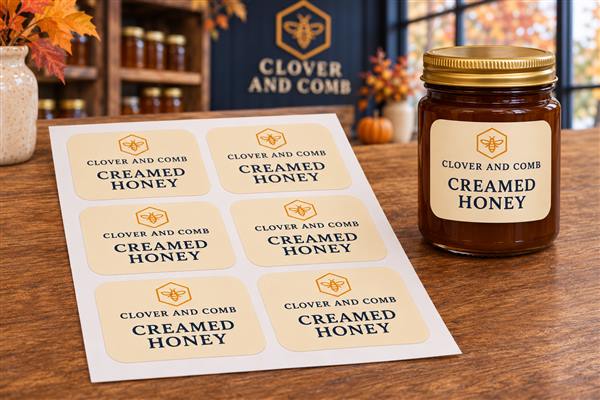
A clear exterior product-identity label
DecentCustom’s custom product labels offer full-color printing, customizable sizes and several shapes, including rounded rectangles. The page lists white paper among its material options and describes it for indoor use and dry products.
The white-paper, matte sheet shown here is a concept for a dry exterior application. Confirm the material, size, finish, artwork and quantity for the actual package. Provide the complete, accurate copy required for your own product; this example only illustrates the front name and branding.
Compare other formats in custom labels and stickers, or explore custom products from DecentCustom for wider shop needs.
At the shelf, start with the form, verify the ingredients and ask about the texture. Those three answers are more useful than guessing what a white or thick jar must contain.