
Frozen food specialty stores · A useful list for the food already at home
You are considering another bag of ravioli at the frozen food shop. At home, there may already be two in the middle drawer—or one, if someone made dinner from it yesterday. A freezer inventory list is useful when it answers that particular question, rather than simply recording that you once bought ravioli.
Record the exact food, the unit you are counting, how much remains and where it is. Update the same list when a pack enters or leaves the freezer. Before shopping, compare it with the meals you actually plan to make. Keep partly used packs and uncertain counts explicit; an estimated half bag is not an unopened bag, and “check” is not zero.
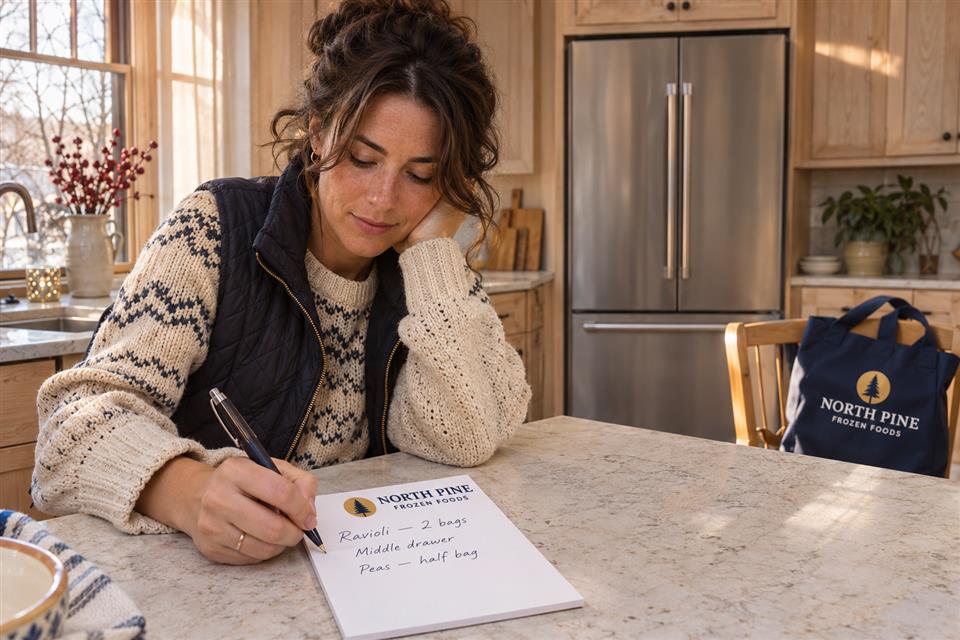
A full freezer is not the same as a useful meal plan
In a February 2026 freezer-inventory discussion, the original poster lists purchased foods and homemade portions but says the freezer has been missing from weekly meal planning. They are running out of space. A reply suggests checking it before deciding the coming meals, and the poster recognizes the missing habit.
That is one person’s account, with an unverified identity and location. It does not establish how often U.S. shoppers have this problem. It does show why making a list once may not be enough: the information has to stay connected to what gets used and what gets bought.
For a frozen food specialty store, a useful take-home aid can support that connection. It should help someone remember the products already at home, even when the right decision is to buy less on the next visit.
Choose a counting unit you can recognize
The Kitchn’s freezer-inventory method uses categories and circles that are added or crossed off as food changes. The important choice is what each mark represents. A circle for one family tray and a circle for one individual portion mean different things.
For purchased frozen foods, the unopened package is often a convenient starting unit. Write enough of the product name and pack size to distinguish similar items: “cheese ravioli, 20 oz bag” is more useful than “pasta.” Use the package description you actually have, including a brand or variety when that distinguishes two products.
Then add a location another household member can understand: “middle drawer” or “basement freezer, left basket.” If you move the item, change the location too. A list that sends someone to the wrong freezer is only partly helpful.
A Minnesota Extension inventory worksheet hosted by UC ANR separates food, package counts and packages removed. It also includes a date-frozen field for home-frozen foods. For a commercially frozen purchase, do not invent the manufacturer’s freezing date. If a purchase date helps your own planning, label it “purchased” and record only what you know.
Keep the original product information available. The inventory is a record of contents and changes; it cannot establish whether food is safe, replace product instructions or resolve an unknown storage history.
A completed freezer inventory, with one update walked through
Here is a fictional household example. The sizes identify the packs; they are not serving recommendations. “About half” is an estimate, not a measured weight.
| Food and counting unit | What remains | Location | Planning note |
|---|---|---|---|
| Chopped spinach, 12 oz bag | 1 unopened bag | Bottom drawer, left | Available to plan |
| Cheese ravioli, 20 oz bag | 2 unopened bags | Middle drawer | Consider for Wednesday |
| Peas, 16 oz bag | 1 opened bag, about half left | Top drawer | Check amount for the chosen meal |
| Vegetable dumplings, 12-count box | 1 unopened box | Top drawer, right | Available to plan |
Start with two bags of ravioli
One bag is taken out: change the ravioli row from two unopened bags to one. “Consider for Wednesday” is only a planning note; it never changed the physical count. If someone now chooses that last bag for another meal, update the plan so two people do not rely on it.
Two matching bags are bought and put away: add those two to the one actually remaining. The row now reads three unopened 20 oz bags: 2 − 1 + 2 = 3. Confirm the location instead of assuming the new packs went into the same drawer.
A different pack size arrives: give it a separate row or state the two sizes explicitly. “Three bags” alone would hide a meaningful difference. Do not convert the count into portions or a meal total without checking the actual product and household needs.
The peas need a different update. If some are used and the bag returns with less inside, revise the remaining amount in plain language. When the bag is finished, remove it from the current inventory. Do not leave a full-bag mark simply because the empty packaging is still nearby.
Before the next shop visit, read the current rows against your meal plan. The example shows ravioli on hand, so another bag needs a reason. The peas may or may not cover your intended use: check that uncertainty before treating a full new bag as necessary.
Make updating easier than remembering later
NDSU Extension’s Food Freezing Guide includes a simple inventory instruction: update the list as food is put in or taken out. The useful routine is tied to the change itself.
Keep the active list somewhere convenient to the people who use it. On paper, leave the pen with the list and change the remaining count when you take or add a pack. If you prefer a shared phone note, agree that everyone edits that same note. Two independently maintained lists create another reconciliation task.
If you want a photo of a paper list for the store, take it after the latest check. Treat it as a dated snapshot, not a second live inventory. A household member may use food after the photo was taken.
If the list and the contents disagree, correct the affected row from an actual check. Mark an uncertain count “check” until it is verified; do not silently replace it with zero or keep guessing from the old number. Do not leave frozen food out for a prolonged list-writing session.
Missouri Extension’s Freezing Basics also emphasizes keeping the inventory handy and simple to add to or subtract from. If your system is repeatedly abandoned, shorten it. Exact product, remaining amount and location may be more useful than a beautifully formatted page no one updates.
Questions shoppers ask about keeping a freezer list
Should I count packages or portions?
Use a unit that stays clear to everyone reading the list. For purchased foods, name the product and package size and count unopened packs. If you track homemade portions, say what your portion means rather than mixing it with package counts. Describe an opened bag separately, including an approximate remainder when that is all you know.
What if someone takes food out and forgets to update the list?
Check the affected item and correct its row. Agree on a small action the person can do at the moment of use, such as crossing out one pack or changing the shared note. If the routine keeps failing, reduce the number of fields. The list should reflect the freezer, rather than require everyone to remember an increasingly inaccurate record.
Is paper or a phone note better for a shared freezer?
Choose the one people will consult and update. Paper can be visible near the household’s planning area; a shared note can travel with the shopper and let others edit it. Decide which is the current record. A photo of paper is useful for reference but will not automatically reflect later changes at home.
For shop owners: offer a useful blank page, not another chore
An ordinary notepad, whiteboard or shared note may already do the job. A small branded pad is an optional customer takeaway when handwriting suits the audience. Keep the logo modest and leave space for the customer’s actual foods.
A helpful hand-off at checkout
“If a paper list works for you, here’s a pad for noting what is already in your freezer. Write the pack size, what is left and where it is. Change the list when you use something, then check it before your next shopping trip.”
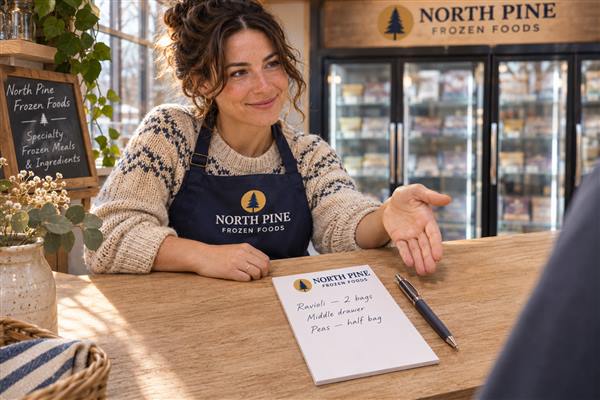
A paper format with room to write
DecentCustom’s 4 × 6 inch custom adhesive notepads list 25 blank paper sheets per pad, a sticky top behind the sheets and logo customization. The illustrated version uses a logo header with handwritten notes below.
Separate sheets per pad from the number of pads ordered. Confirm quantity, selected color, artwork placement and proof. This is a paper memo pad, not a magnetic freezer list, food label or waterproof inventory sheet.
Compare custom notepads and notebooks for other writing formats, or explore custom products from DecentCustom after deciding what would be useful to your customers.
Before ordering, ask someone unfamiliar with the idea to explain the ravioli update and the half-bag entry. If they mistake either for a fixed number of meals, revise the explanation. That is a suggested reader check, not a test completed for this article or evidence that a branded pad improves repeat purchases.