
Bulk food & refill shops · First-visit shopping guide
A shopper arrives with a jar, finds the oats and starts filling. Only at checkout do they discover that the empty container should have been weighed first. A clear bulk-food guide needs to reach that person before the dispenser does.
First, confirm that the shop accepts your container and ask where its empty weight is recorded. Follow that shop’s filling instructions, keep the food’s name or product code with the container, and show the recorded container weight at checkout. The location of the scale, the labeling system and who fills the food can differ.
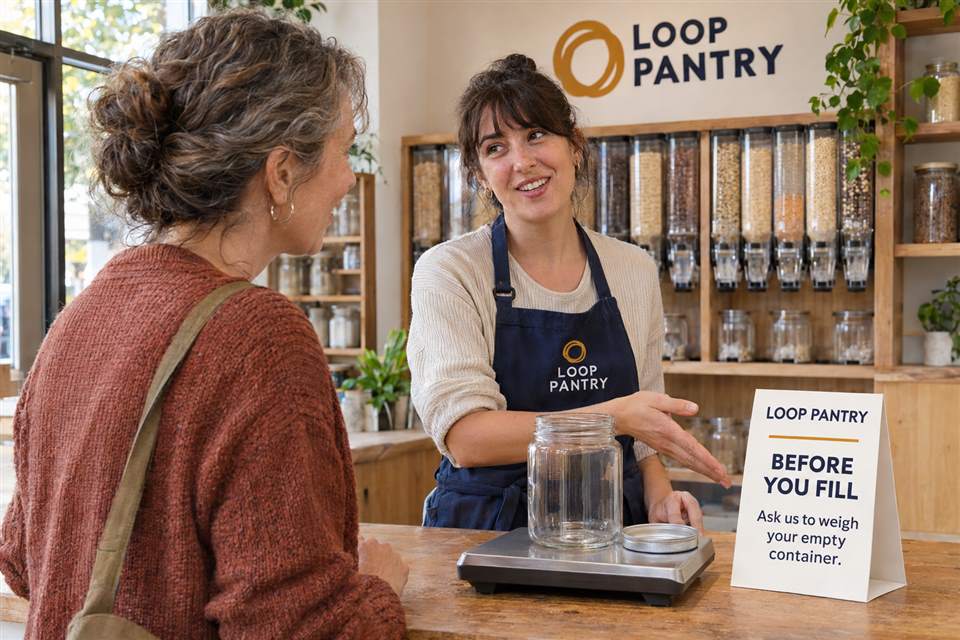
Find the local starting point before filling
In an October 2026 shopper discussion about tare weight, a customer was unsure how the empty weight of their jar should reach checkout. A reply suggested asking the service desk, and the shopper planned to do that next time. The account is not a verified transaction record or evidence of a chain-wide problem; it identifies a practical question a shop can answer earlier.
The answer cannot be copied unchanged from another retailer. Sprouts’ own-container FAQ directs customers to a cashier for the container’s tare weight before filling. Exist Green in Omaha describes a front-of-store scale and weight tags, then asks customers to bring food-refill orders to the counter because most food is filled by staff. Meanwhile, WinCo’s FAQ says it does not approve consumer-owned containers for food refilling.
These are individual operators’ published instructions, reviewed in November 2026. For your shop, put the actual starting point on the visit page and where a newcomer first encounters the refill area. “Ask at this counter before you fill” is more useful than “refill in three easy steps” when the first step’s location is missing.
Keep two pieces of information with each purchase
Tare identifies the container’s empty weight. The product name or code identifies the food. One does not replace the other. A number without a label or unit leaves staff guessing what it means.
Whole Foods Market’s bulk-shopping guide explains recording the bin’s PLU number on a tie or label, with a printed scale tag where that system is available. A 2023 first-visit account describes a different shop that used food names instead of the PLUs the visitor expected. The same shopper’s ounce markings also did not match that store’s pound-based process. That older account illustrates variation, not current prices or a universal refill system.
Ask staff which unit and identifier they need. If they use a written tag, the distinction can be as simple as this fictional example:
Food: Rolled oats
Empty container weight: 0.30 lb
Product code: Record the code from this bin if the shop uses one.
This is an explanation of the fields, not a replacement for the shop’s approved tag. Keep a staff-issued tare label readable; do not change it to the filled-container weight. Do not invent a product code or assume two similar-looking foods have the same one.
What the empty weight changes: one worked example
For a purchase priced by net weight, the basic distinction is the food’s weight versus the combined weight of the food and container. Keep all weights in the same unit:
1.80 lb filled weight − 0.30 lb empty container = 1.50 lb food
At an illustrative $4.00 per pound, 1.50 lb × $4.00/lb = $6.00 for the food.
These are invented teaching numbers, not a store quote or a measured transaction. The example explains why the empty weight matters; it does not tell staff how to operate a particular register. Ask the shop what parts of the container belong in its weighing procedure and keep that setup consistent. If a label or unit is unclear, have staff resolve it before filling.
The Zero Wasted tare guide also makes the useful distinction between recording empty weight and recording the food’s identifier. Its 2018 examples are background reading; current acceptance and checkout instructions should come from the shop you are visiting.
A counter prompt that gives the next action
The following completed copy assumes a fictional shop where staff record the tare before a customer fills an approved container. It belongs at that first counter, not beyond the food bins.
Ask us to weigh your empty container.
We’ll check the container, record its empty weight and explain how to identify your food.
Keep the weight label with your container and show it at checkout.
First visit or no container? Ask us here.
A short front-facing sign can carry the headline and first sentence; the fuller explanation can sit alongside it or on the reverse after checking the print layout. If staff fill food orders, replace the self-filling assumption with “Bring your tagged container here and tell us what you need.” If a shop does not accept personal containers, state its available alternative instead.
Tare Bulk Foods in Dickson, Tennessee, for example, describes a tare station and provides paper bags for shoppers without containers. That alternative is useful information before someone decides they cannot visit without a new set of jars. Confirm what your own shop actually offers.
First-visit questions worth answering plainly
Do I need to buy matching jars before my first visit?
Check the shop’s container policy first. Ask whether containers you already own are acceptable and what is available if you arrive without one. Do not promise a free jar, a deposit system or acceptance of every container unless that is your shop’s actual arrangement. Start with a small shopping list and the containers that fit the approved process.
Can I write the empty weight at home?
Do not assume a home measurement will be accepted. Ask whether the shop needs to weigh and label the container itself, which unit it uses and where to go on arrival. A visible label is useful only when its meaning and measurement fit that store’s procedure.
What if I already filled the jar and have no tare label?
Tell an employee what happened before trying to check out. Do not guess the empty weight or substitute a different jar’s label. The shop must decide how to handle the missing information within its own process. A helpful sign can name the assistance counter so the visitor knows where to ask without feeling blamed.
Can I use any checkout or self-checkout?
Ask which checkout supports the shop’s own-container process. Do not assume a screen has a custom-tare option because another store did. Present the recorded empty weight and food identifier to staff as directed. If the displayed information seems inconsistent, ask for clarification while the item and its label are available.
Choose a printed format only after the message works
An existing counter sign or ordinary printed sheet may do the job. A folded table tent is an option when a stable, repeated message needs to stand on the counter without a separate holder. Place it where the customer makes the pre-fill decision; branding cannot repair instructions located too late.
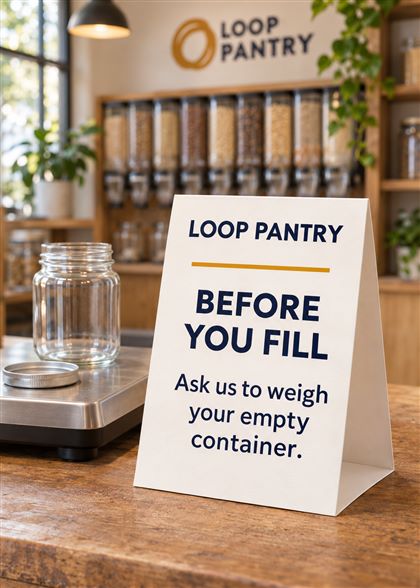
A clear prompt beside the first scale
DecentCustom’s custom table tents list a 5 × 7 inch size, 14pt card stock and full-color printing. Glossy is the default finish, with matte listed as an option.
Confirm the selected quantity, finish, artwork orientation and fold layout before production. This is a paper communication piece, not a weighing device, food-contact container or substitute for staff assistance. Keep changing operational details easy to update.
Compare other custom marketing materials if wall placement or a take-home explanation fits better. For a wider branded range, explore custom products from DecentCustom once the customer’s task and placement are clear.
Before ordering, ask someone unfamiliar with the shop where they would go first and what information they would keep with the jar. If they head for the food before finding the tare instructions, revise the placement or wording. This is a suggested review method, not a completed customer test.