
Household & personal care refills · Planning a repeat visit
Remembering that you need hand soap is only half of preparing for a refill-shop visit. You also need to remember which product you want, whether a suitable bottle is ready and what to do if it is not. A shopping list can hold those decisions together.
Write down the product you actually need, the exact name or variant you want, the status of its container and the next action. Before leaving, check the shop’s current menu and container requirements, then confirm that the list and the prepared containers are coming with you. A shared phone note or ordinary paper can work.
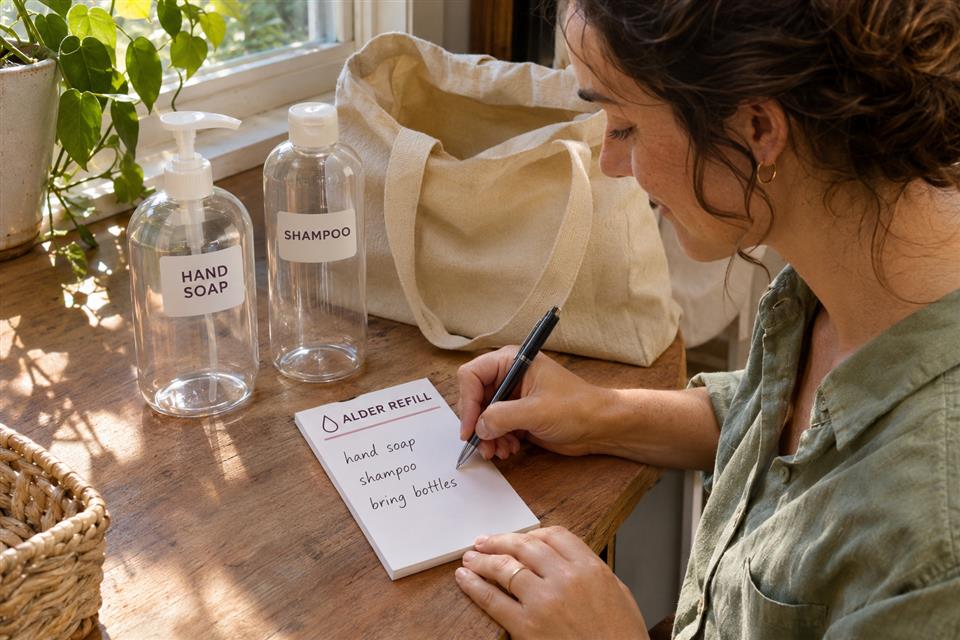
Plan for the forgotten bottle, not just the shopping reminder
In a discussion about refillable products, one commenter describes the inconvenience of remembering an unplanned purchase such as shampoo but having no container for it. Buying another container every time was not an appealing solution. It is one person’s view in a 2025 thread, not a measure of how often American refill customers forget bottles.
The practical lesson for a household and personal-care refillery is to connect the reminder to the preparation. “Visit us again” does not tell a customer what to bring. “Check your list and the containers for those products before you leave” gives them something specific to do.
Fill Up Buttercup’s preparation guide starts with taking stock at home, making a list, gathering containers and checking what the shop offers. The useful sequence begins before a person arrives at the refill bar. For a repeat visit, the missing link is often keeping the product decision and its container on the same list.
Give each item a next action
A list that says only “soap” leaves several questions open. Is that hand soap or dish soap? Is the preferred product available? Is its container still in use? Add enough detail to resolve the purchase without turning the list into a household inventory project.
Use four pieces of information: need, exact product, container status and next action. If you cannot confirm the product name at home, write a question for the employee rather than substituting a guess. A photo of the existing product information can help you ask clearly; it does not establish that every bottle is suitable for every refill.
Check existing supplies before adding a purchase. Then check the shop’s current menu or ask staff about the specific item. The Honest + Simple beginner’s guide similarly recommends checking the website, making a shopping list and gathering containers and bags. Its general advice is a starting point; the store and product determine the actual refill requirements.
A completed example: ready, wait and skip
The following is an invented planning example, not a record of a real household or a recommendation for particular soap or shampoo products.
Hand soap — prepare for this visit
Need: Replenish the hand soap.
Exact product: Confirm the name of the hand soap bought last time.
Container status: Empty bottle available; check that it meets this shop’s preparation requirements.
Next action: Confirm availability, prepare the accepted bottle as directed and add it to the shopping bag with the list.
Shampoo — keep the reminder, wait on the refill
Need: Running low, but the current bottle is still in use.
Exact product: Record the preferred shampoo’s name or variant.
Container status: Not ready for this visit.
Next action: Ask the shop about its appropriate option, or leave this item for a later visit. Do not mark the bottle ready merely because shampoo is on the list.
Laundry detergent — leave it off this purchase
Need: A check at home finds enough already on hand.
Exact product: No purchase needed now.
Container status: Not needed for this trip.
Next action: Skip this item and review it when the household actually needs more.
The list is successful when it helps someone make the right purchase or defer an unnecessary one. It does not have to turn every low-looking bottle into an immediate order. Check the final list and bag together before leaving, instead of assuming that writing an item down also means its container is packed.
Give the customer a useful take-home prompt
A refill shop can offer a short reminder at the end of a visit without prescribing when every household should return. Here is complete sample copy for the fictional ALDER REFILL:
Check what you already have. Note the exact products you need and whether their containers are ready.
Before leaving, check our current refill menu and bring your list with the containers that meet our requirements.
Not sure about a product or container? Ask us before filling. If you arrive without a container, ask which options are available today.
Keep the prompt separate from product-use directions. A shopping note should not become a substitute for the actual ingredient information, product label or instructions the customer needs. Refillery on the Rogue’s FAQ, for example, specifically says that ingredient lists and sticker labels are available for its products. Tell customers how to obtain the information your shop provides rather than assuming a handwritten product name is enough.
If a customer forgets a bottle, explain the options you actually have that day. Do not promise free containers, a deposit return or a particular discount unless those are your current terms. Another visit can be a reasonable choice; a reminder should help the person prepare, not pressure them to buy an extra vessel.
Three questions a helpful reminder should answer
What if my bottle is not empty yet?
Keep “needed soon” separate from “container ready.” Ask the shop what is appropriate for that exact product and container, or plan a later visit. A general shopping checklist cannot establish whether topping up, changing products or transferring contents is suitable. Record the next action instead of treating every bottle as ready to refill.
What if I arrive without the right container?
Ask staff which options are currently available and what they cost. Shops may offer containers, but the arrangement is not universal. Compare the actual option with waiting until you can bring an accepted container. Do not assume that a container you happen to carry will work for a different household or personal-care product.
Can I use a shared phone list instead of paper?
Yes. Use whichever format the person doing the shopping will actually check. In a shared note, mark an item “container ready” only after the person preparing it has confirmed that status. With paper, give the current list to the shopper and retire the superseded version. The useful part is the shared information, not the medium or the logo.
When a branded notepad earns its place
An existing notepad, scrap paper or shared phone note may already solve the task. A small branded pad is an optional take-home format for customers who prefer handwriting. Leave room for the person’s own products and questions rather than filling the page with promotions.
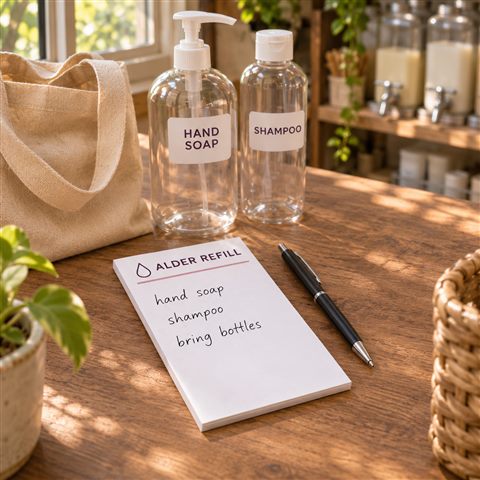
A compact paper list with room to write
DecentCustom’s 4 × 6 inch custom adhesive notepads list 25 blank paper sheets per pad and a sticky top behind the sheets. The page offers adding a logo; the example shown here uses a logo header with handwritten notes below.
Keep sheets per pad separate from the number of pads being ordered. Confirm the order quantity, selected color, print area and proof. This paper memo pad is not a magnetic list or a bottle label.
Compare custom notepads and notebooks if a different writing format suits your customers. Explore the wider custom products from DecentCustom only after choosing a useful role for the item.
Before printing a batch, ask a person unfamiliar with the draft to use it to explain which products they would buy, which containers are ready and what they would do about a missing bottle. Revise any ambiguous wording. This is a suggested reader check, not a completed test or evidence that a notepad increases return visits.