
A spice gift can open the door to a recipe someone has wanted to try. It can also become another unopened jar in a crowded cupboard. Before choosing the biggest collection or the most unusual blend, find out what the recipient actually wants to cook.
Match the gift to a dish or cooking habit the recipient enjoys, check what they already own, and choose a form they want to use. Add a clear starting point, such as their chosen recipe. When those details are unknown, ask a small question or consider a gift card to a shop they can use.
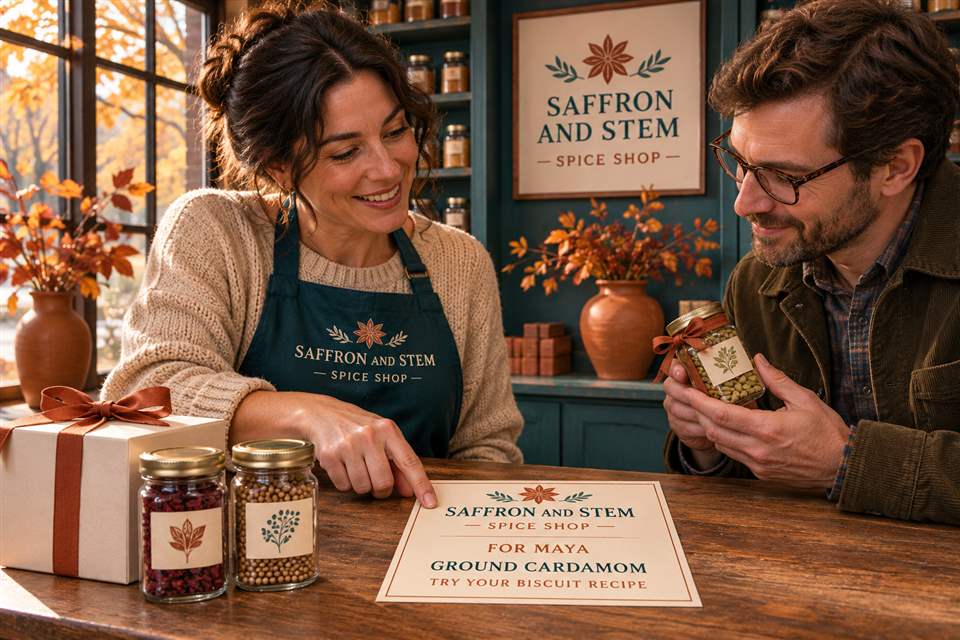
“They love cooking” is the beginning of the brief
In a November 2025 cooking-gift discussion, a buyer asked about simple presents such as spices. Some commenters welcomed ingredients; another described a Cajun seasoning gift that went unused because they did not cook that cuisine. These individual accounts are a useful counterexample to the idea that every cook wants every spice. They are not a survey of gift preferences.
Start with a specific observation: “She bakes biscuits on weekends,” “He keeps making that lentil dish,” or “They asked where to find this seasoning.” That gives a shopkeeper something useful to work with. A vague label such as foodie leaves too much guessing.
Ask three small questions before choosing a set
1. What do they cook—or genuinely want to try?
The Spice House gift guide separates gifts for grillers, bakers and home cooks, and offers a way to build a custom box. That is a useful starting structure. Narrow it further to the recipient’s own dishes rather than treating a category as a guarantee.
Try asking, “Is there a recipe you keep meaning to make?” You can preserve some surprise while learning which ingredient would be welcome. If the person has no interest in a cuisine, an impressive collection for that cuisine is still a poor fit.
2. Are you filling a real gap or adding duplicates?
Ask which spices they are running low on or which exact item is on their wish list. An existing jar is not automatically a reason to avoid a spice: a requested replacement can be useful. An unfamiliar jar is not automatically a good addition either.
Oaktown’s holiday gift article distinguishes a starter collection from other gifts such as teas and finishing salts. A starter set may suit someone building a pantry, while someone with an established collection needs a more selective choice. Confirm the current contents of any set you consider; an older gift article is not a current shipping or availability promise.
3. How much preparation do they want?
Whole and ground spices are not interchangeable gifts just because the names match. Milk Street’s whole-versus-ground guide explains that the forms do different jobs and discusses grinding tools. For gift selection, check the form the intended recipe uses and whether the recipient wants the extra preparation.
Someone may enjoy cooking but prefer ready-to-measure ground spices. Someone else may specifically want whole spices for a recipe or a grinder they already use. Buy for that preference; a gift should not quietly assign a new kitchen chore.
Three worked choices: what to buy, what to leave out
These people and decisions are fictional examples, not customer stories or endorsements of particular spice products.
Maya: a weekend baker with a recipe saved
Known: Maya wants to try a biscuit recipe that calls for ground cardamom. She already has cinnamon and does not want to grind spices.
Choice: ask the spice shop for a small ground-cardamom option, check the exact product with her request, and include the recipe she selected.
Leave out: a large starter assortment that repeats her pantry, or whole pods that add an unwanted preparation step. If only whole cardamom is available, ask Maya before substituting; otherwise choose another wanted gift.
Leon: a regular cook asking for a familiar blend
Known: Leon has named the exact blend he uses on his weeknight vegetables and says his jar is almost empty.
Choice: use the full product name and maker to find the requested replacement. Check its current description and contents rather than buying any jar with a similar-looking name.
Leave out: an extra-hot novelty collection selected only because it looks adventurous. If the requested product is unavailable, ask whether he wants a substitute or would prefer to choose later.
Sam: enthusiastic about cooking, with an unknown pantry
Known: Sam enjoys cooking. You do not know which dishes, ingredients or preparation tools they prefer.
Choice: ask for one item they want to try. If that would spoil the surprise, consider a gift card from a shop Sam can actually visit or order from, after checking its practical use details.
Leave out: a big collection chosen to compensate for missing information. A smaller guess is still a guess. There is no need to force a spice purchase when another gift would fit better.
Give the recipient a starting point
A novel ingredient becomes a clearer gift when its purpose travels with it. Selefina’s small-gift guide offers both sample packets and recipe samplers that pair a recipe postcard with its spice packets. The useful distinction is an open-ended taste experiment versus a planned first use—not simply the number of items.
The UK merchant No10 Spice’s cooking-gift article also recommends matching the gift to cooking habits and including a recipe note. Its UK prices and delivery details do not establish terms for a US purchase. More broadly, being consumable does not guarantee a gift will be used; the recipient’s preferences still matter.
For: Maya
Your spice: ground cardamom
Why I chose it: for the biscuit recipe you wanted to try
Start here: the recipe you selected is saved with this gift
From: Alex
This note connects a known wish to a specific item. It does not invent a recipe, replace the product’s information or assume that a shop supplies every other ingredient. Before wrapping, check that the promised recipe is actually included or accessible. If it is missing, add it or revise the note.
Questions spice-gift buyers ask
What if the recipient already has plenty of spices?
Look for an exact requested replacement or an ingredient for a recipe they want to try. Avoid assuming that a missing spice is a wanted spice. If you cannot identify a useful choice, ask or let them choose through an appropriate shop gift card.
Should I give whole spices or ground spices?
Match the recipient’s recipe and preparation preference. Check whether whole spices are actually wanted and whether any grinding step is welcome. Ground spices can be the better fit for someone who wants to measure and cook without extra preparation.
Is a larger spice gift set a better present?
Only when its contents fit the recipient. A requested replacement, a small sampler for a willing experimenter, or ingredients connected to a chosen recipe may be more useful than a broad collection. Check every item instead of using jar count as the measure of thoughtfulness.
For spice shops: make the gift’s purpose easy to carry home
A handwritten note or an email can do this job. For a shop assembling repeated gift selections, a printed companion can provide a consistent place for a personal message and first-use reference. Keep it separate from the sealed product packaging and retain the product’s own information.
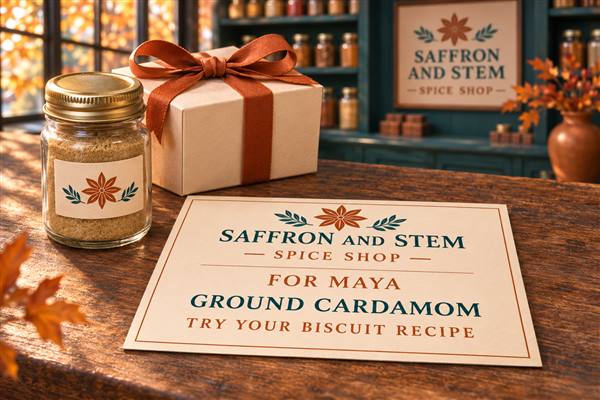
A flat postcard with room for a useful message
DecentCustom’s custom printed postcards include a horizontal 6 × 4-inch format and full-color printing options. An uncoated version could suit a message completed by hand; the product page describes that option as easy to write on.
Select the required stock rather than assuming it is the default: the page lists 16pt thickness and glossy front only as defaults, and ordering in increments of 50. Confirm the size, finish, quantity and artwork for the intended use.
Compare other formats in custom marketing materials, or explore custom products from DecentCustom for broader shop needs.
Before the gift leaves the counter, the buyer should be able to explain why this spice suits this person and where they can start. When the answer is specific, the presentation supports a considered choice.