
You order a charcuterie board for a gathering—or send one as a gift—and picture a wooden board the recipient can keep. The shop may mean a prepared selection on a disposable platter. A beautiful product photo does not settle which items are included, which are upgrades or which belong to the shop.
Check four parts separately: the food selection, the serving container, whether any reusable board is purchased or rented, and the serving tools or guest supplies. The answer depends on the exact product and options. Ask for unclear inclusions in writing before ordering, especially when a keepsake board is part of your gift.
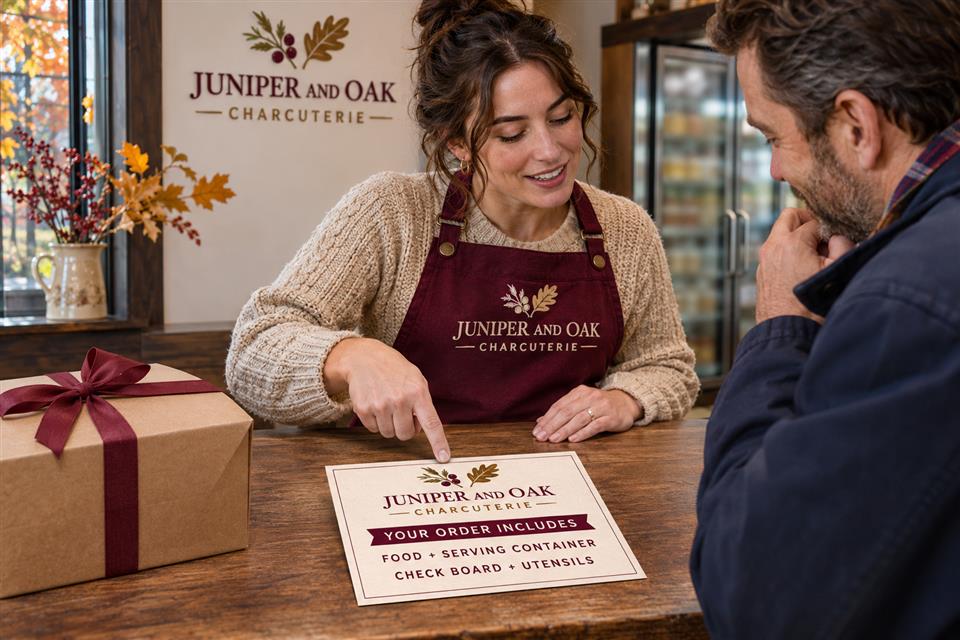
The word “board” can describe the food order and its presentation
In a January 2022 charcuterie discussion, the original poster said they had assumed customers kept the board. Replies described different arrangements: including it in the purchase, retaining large display boards, or lending boards with a return expectation. These are old individual reports, not current terms for a particular shop.
The useful question is therefore more specific than “Is the board included?” Ask: “What will this order arrive on, and does that item become mine?” Then ask about the tools needed to serve it. Those two questions separate a complete food purchase from an assumed keepsake or a missing set of supplies.
Five shop guides show why the exact option matters
The following examples reflect the named businesses’ published pages reviewed November 4, 2026. They illustrate different arrangements; confirm the details of your chosen order with its seller.
Roots & Ritual: disposable and rental arrangements differ
Roots & Ritual’s FAQ describes disposable palm-leaf boards as an option and separately explains a board-rental arrangement. A reusable board shown in a photo should not automatically be treated as a purchased gift. Ask which option your selection uses.
My CharCUTErie: keeping the board can be a separate choice
My CharCUTErie’s FAQ describes returning the board, box and dishes, arranging collection, or keeping the board for an additional fee. If you are sending an order directly to someone else, resolve that choice before creating a return obligation the recipient did not expect.
Gourmet Grazing Boards: a wooden board is an upgrade
Gourmet Grazing Boards’ FAQ says the standard presentation uses a disposable palm-leaf platter. It describes adding a wooden board for an extra charge or arranging to use a customer’s own board. These are distinct requests, rather than interchangeable descriptions of the standard order.
Cullinary Creations: the container and tools have their own descriptions
Cullinary Creations’ menu guide distinguishes disposable presentation from wooden boards available to purchase or rent. It also lists a cracker box and disposable tongs or cutlery with its board orders. Check both categories; knowing the container alone does not tell you what serving tools come with it.
Graze & Gather: even products from one shop can differ
Graze & Gather’s menu describes classic selections in disposable containers, while its XL board description explicitly includes a wooden board. It lists keepsake upgrades and plates, napkins and utensils separately. Read the selected product and add-ons together; do not transfer one size’s inclusions to every order.
No single example establishes a universal fee, return deadline, guest count or package for the industry. The order description and confirmed options are the relevant starting point.
A filled-in order summary, with the assumptions removed
Here is a fictional example of a customer ordering a prepared selection for pickup. The shop, reference and inclusions are invented to demonstrate a useful confirmation—not a real offer.
- Food: the selected meat-and-cheese assortment described in the confirmed order.
- Presentation: one disposable serving platter inside the pickup box.
- Reusable wooden board: not included; no board rental selected.
- Crackers: one separate cracker box included.
- Serving tools: disposable tongs included.
- Guest supplies: individual plates and napkins not included.
- Pickup: use the time and location stated in the order confirmation.
This customer can now arrange plates and napkins instead of discovering the gap at the gathering. They also know there is no reusable wooden board to keep or return in this particular example. The record says what each category contains; it does not ask the customer to infer it from the price or photograph.
What changes if the order is a keepsake gift?
Suppose the buyer wanted the recipient to keep a wooden board. The example above does not meet that request. Before checkout, ask whether a purchase option is available and whether the written order can say that the board is the recipient’s to keep. Confirm any extra charge as part of that choice.
If only a rental is available, explain that arrangement to the recipient and agree who would handle the return before choosing it. If that is inconvenient, select the disposable presentation or a different gift that matches the intention. Do not rename a rented item a keepsake simply because it accompanies a gift.
When is the question actually resolved?
A reply such as “Everything is included” still leaves the categories unclear. Ask the seller to identify the container, ownership arrangement and tools explicitly. Save the answer with the exact product and selected options. If something remains uncertain, mark it as awaiting confirmation rather than silently treating it as included.
Common questions before ordering
Does buying a charcuterie board mean I keep the wooden board?
Not necessarily. Some orders use disposable platters; others offer a purchased board or a rental. Ask what the selected product arrives on and whether it is yours to keep. If a rental is involved, obtain its return arrangements from the seller before deciding.
Are crackers, tongs, plates and napkins all included?
Check them separately. Serving tools used to portion the food are different from guest plates and napkins. Ask for an itemized description or review the listed add-ons. The five examples above show that knowing one inclusion does not settle the others.
Can the shop use a board I already own?
Some shops offer this by prior arrangement, as Gourmet Grazing Boards’ FAQ describes. Ask the actual seller before bringing one in, and confirm its acceptance and handover instructions. Do not assume a same-day drop-off or any particular board will be accepted.
For shop owners: keep the confirmed details easy to find
A clear product page and confirmation email may already be enough. If a printed reminder helps at pickup, distinguish the order’s confirmed inclusions from a general brand message. Update the record when an option changes, and keep it with the correct order.
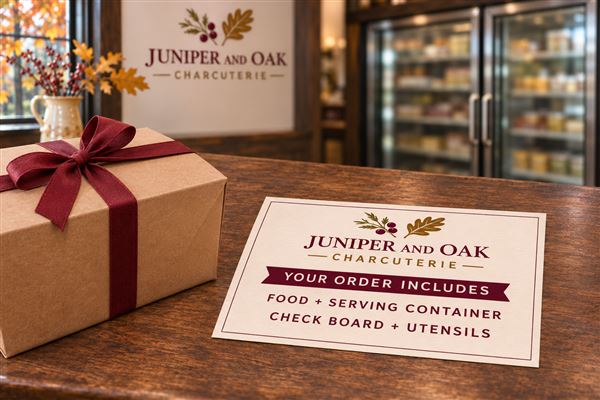
A paper reminder outside the food package
DecentCustom’s custom printed postcards offer horizontal and vertical formats, full-color printing and several paper choices. A 6 × 4-inch horizontal card is one listed format. The uncoated option is described as easy to write on; select and confirm it when planning handwritten order details.
The page lists 16pt as the default thickness and glossy front only as the default finish, so the uncoated concept shown should not be assumed to be the default configuration. It also specifies ordering in increments of 50. Confirm the size, stock, artwork and quantity before ordering.
Compare other formats in custom marketing materials, or explore custom products from DecentCustom for broader shop needs.
A general card can prompt the conversation, but it does not replace the actual order confirmation. The practical finish is a customer who can identify what arrives, what belongs to them and what they still need to arrange.