
CANDY SHOPS · A GIFT MIX WITH A CLEAR PLAN
Choose a build-your-own candy mix when specific favorites or dislikes matter. Choose a mystery mix when the recipient enjoys discovering whatever the shop selects. A themed or curated mix sits between those options: you choose a category, but may not choose every candy or its proportion. Read the actual selection rules before paying.
A colorful bag is an appealing gift, but a photograph cannot tell you whether it contains someone’s favorite peach rings or mostly sour pieces they would leave behind. The useful question is not simply “Which mix looks best?” It is “Who chooses what goes inside?”
This pick-and-mix candy guide helps you compare the shopping options, write a useful gift brief, and handle an unavailable favorite without losing the point of the gift.
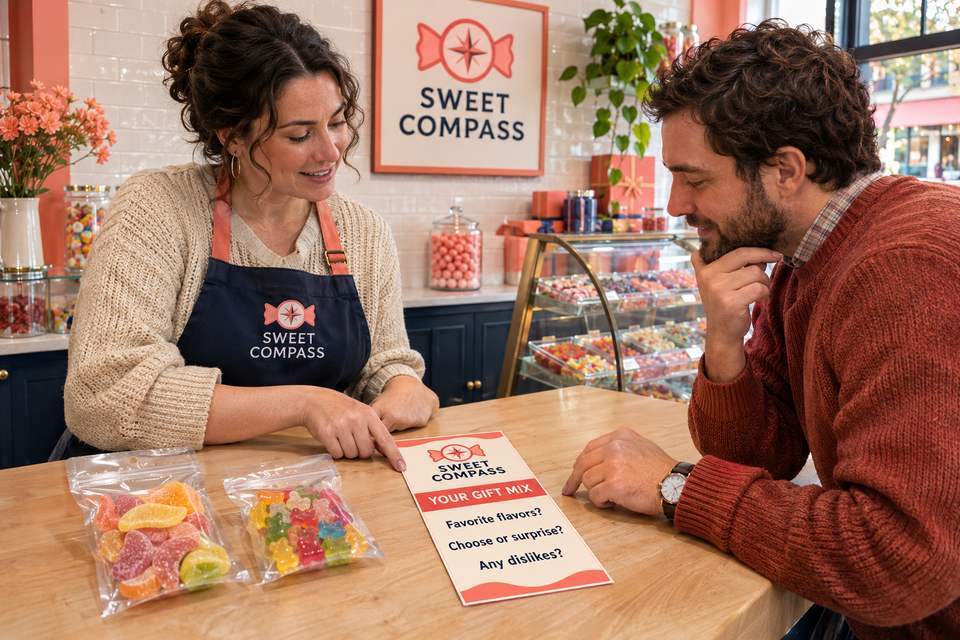
Build your own, curated or mystery?
Poppin Candy’s pick-and-mix guide describes both customer-built formats and mystery boxes. The difference matters more than the container: a bowl, platter or pouch can still offer different levels of control over the contents.
| Option | You generally choose | Check before ordering |
|---|---|---|
| Build your own | Named candies from the available selection | Does each choice set a weight, a scoop, a slot or just a preference? |
| Curated or themed mix | A description such as sweet, sour or a brand theme | Are the exact contents listed, or can varieties and proportions change? |
| Mystery mix | The stated format or category, with the shop selecting the contents | Which features are promised, and which are deliberately a surprise? |
These are shopping distinctions, not universal product definitions. A seller might use different names. Look at the item you will actually receive, including its current description and checkout choices.
For example, the UK shop PIC N SNACK contrasts its mystery boxes with a build-your-own option that selects sweets in stated weight increments. That is a useful illustration of selection control, not a rule for every shop or an endorsement of delivery to your address.
Start with the recipient, then consider variety
Ask for two favorites and one dislike. “Peach and cola, chewy rather than hard, no sour coating” is a more useful gift direction than “something fun.” If you only know that someone likes gummies, ask whether they prefer sweet or sour and whether they enjoy surprises.
Swedish Candy Store’s first-timer guide organizes choices around flavors and textures. Goodis’s buying guide also suggests looking around before filling a bag, while acknowledging that there is no single correct mix. Those are useful starting points for a conversation, rather than proof that every gift needs the same assortment.
Contrast is optional. A recipient who specifically loves sour candy may prefer a focused sour selection. Someone who dislikes licorice does not need it added simply to make the mix seem more authentic or balanced. Color, shape and a category name also do not establish the ingredients in an individual candy.
Why a fixed candy ratio is not a gift requirement
Pickmix Candy Sweden publishes a suggested flavor ratio as a starting method. Other shops describe different balances. These are editorial recommendations from sellers, not a standard that your gift must satisfy.
Use a recommendation only if it suits the person receiving the gift. “Mostly familiar favorites, with one new variety they want to try” can be a clearer brief than copying percentages from a guide. There is no need to invent an exact weight split when the seller’s ordering system does not let you request one.
Four details to check at checkout
- Selection control. Confirm whether you are choosing exact candies, giving preferences, or accepting the seller’s assortment.
- Quantity basis. Read the stated net weight or piece count and what each selection adds. A number of varieties is not the same as an equal number of pieces of each.
- Substitutions. Ask what happens if a chosen item is unavailable. A note asking for “no sour candy” does not establish that the seller can fulfill it.
- Total and presentation. Check the total price and the container included. Do not assume the large platter or decorative packaging in a lifestyle image is part of the option you selected.
If the answer is unclear, ask before checkout. A photo of an earlier mix may show the style without promising the same contents today. For ingredients or a specific dietary requirement, use the current product information and the seller’s direct answer; a preference brief is not a certification.
Two complete gift decisions
The following examples are fictional. Product names, availability and choices illustrate a decision rather than a real shop’s offer.
Riley knows the recipient dislikes sour candy. A mystery gummy pouch has an attractive photo, but its description does not promise a sweet-only mix. Riley instead chooses the shop’s manual-selection option and confirms peach rings and cola gummies without sour coating. When peach rings are unavailable, the shop offers a named sweet strawberry gummy. Riley checks that this alternative fits the recipient’s preference and accepts it; Riley does not leave the seller to choose any replacement.
Jordan wants a discovery gift but does not know the recipient’s tastes. Before ordering a large mystery assortment, Jordan asks whether the recipient enjoys surprise flavors. They say yes to unfamiliar fruit gummies, but no to licorice. The shop cannot guarantee that its mystery pouch excludes licorice, so Jordan chooses a listed fruit-gummy assortment with disclosed contents instead. It still offers new flavors without treating an unknown assortment as a personalized promise.
A short gift brief you can actually use
Fictional completed preference brief
Recipient likes: peach and cola; chewy gummies.
Recipient dislikes: sour coating.
Selection: named sweet peach rings and cola gummies, if currently available.
If peach rings are unavailable: ask me about the named sweet strawberry alternative before substituting.
Before payment: confirm the selection, quantity basis, total and included pouch.
Keep the accepted selection in the order confirmation or your own note. If you are still waiting for an answer about a replacement, the brief is a request, not an accepted order. After the recipient tries the gift, record the exact candy names they enjoyed so the next gift starts from something known.
For candy shops: make the choices easy to explain
A clear menu, product page or staff conversation may be all you need. If customers want something to take away, custom rack cards for candy shops can present stable gift questions and point customers to your current selection.
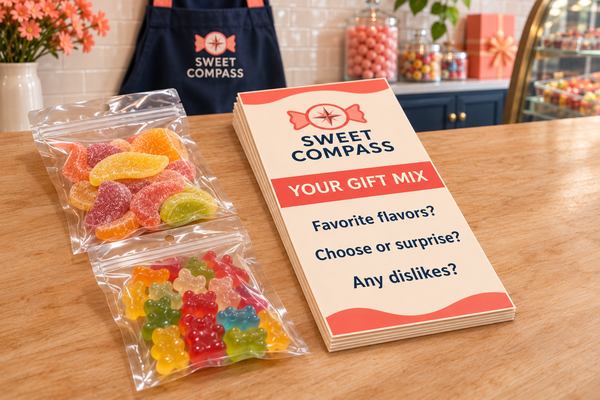
A small guide for the gift conversation
DecentCustom lists a 3.74 × 8.27-inch flat rack card, with 14pt standard cardstock and glossy finish as defaults. Other stock and finish combinations have their own specifications; the package does not list a display holder.
Confirm size, stock, finish, artwork, trim and bleed before ordering. If customers will write on it, ask about the chosen finish. Keep changing candy availability and prices on your current menu rather than printing an assortment you cannot promise.
Explore related custom marketing materials and other custom products from DecentCustom after deciding which information customers need to keep.
Pick-and-mix candy questions
Does every pick-and-mix let me choose every candy?
No. Some options let you select exact items; others are curated or mystery assortments. Read the current product’s selection rules, including quantities and substitution terms.
Should a good candy mix always include licorice and sour pieces?
No. Suggested ratios are starting ideas, not requirements. Choose for the recipient’s preferences, and confirm any exclusions with the seller before ordering.
Will a mystery bag match the photo exactly?
Do not assume so. Check whether the listing promises specific contents or shows a representative assortment. If a particular candy matters, choose an option that explicitly includes it and confirm availability.
Research note: an original June 2026 discussion about random candy mixes included both enthusiasm for discovery and dissatisfaction with a mix’s proportions. These are individual, unverified accounts, not a customer survey. Sources and the linked print product were checked November 7, 2026.