
CHOCOLATE SHOPS · READ THE LABEL, FIND YOUR BAR
Cacao percentage describes composition, not a complete flavor profile. It indicates the proportion of the chocolate made from cacao-derived ingredients, including cocoa butter. It is not simply the percentage of cocoa powder. Two chocolates marked 70% can taste different, and a larger number does not automatically make a bar better for your preferences.
You enjoyed a 70% chocolate last week, so you buy another maker’s 70% bar. This one seems much more bitter. The label is not necessarily wrong: you have matched one number while changing the chocolate.
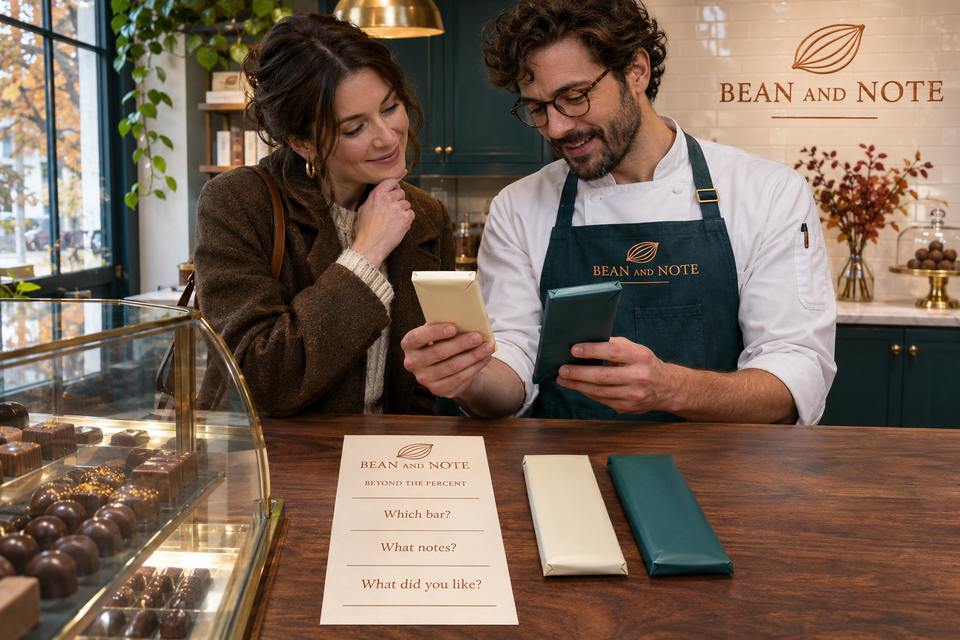
Before choosing a holiday gift or your next everyday bar, read the percentage alongside the product name, ingredients and maker’s description. Here is a practical way to turn those details into a more useful conversation at a chocolate shop.
What does 70% cacao mean?
Theo’s explanation of cocoa percentages describes the share of chocolate weight that comes from cocoa beans, including cocoa liquor and cocoa butter. The number combines cacao components rather than telling you the precise amount of each.
A simple example: a plain 100-gram chocolate bar marked 70% cacao.
100 g × 70% = 70 g of cacao-derived ingredients.
100 g − 70 g = 30 g of other ingredients.
The remaining 30 g is not automatically 30 g of sugar. Read the actual ingredient list rather than assigning the entire remainder to one ingredient.
This is an illustration for a plain bar, not a calculation to apply blindly to every filled or inclusion product. Theo explains that its stated cocoa percentage for bars with additions applies to the chocolate portion. If you are buying a bar with nuts, fruit or a filling, check what the percentage refers to on that particular product.
Cacao Noel’s ingredient explanation also separates cacao-derived ingredients from other components, such as sugar or milk ingredients. You still need the actual label to know what is present in the item you are buying.
Why two 70% chocolates can taste different
A percentage does not reveal every recipe choice. In its own explanation, Valrhona compares chocolates with the same cacao percentage and points out that their proportions of cacao components can differ. Bean selection and the maker’s work also help shape the result.
Wild West Chocolate’s buyer guide makes another useful distinction: percentage is not a quality score. It cannot, on its own, establish whether you will enjoy the bar.
Instead of asking only for “another 70%,” describe the experience you want. “I liked the cocoa flavor but would prefer a less sharp finish” gives staff more to work with. So does “I enjoyed the fruit notes in this exact bar.” Bring the wrapper or a photograph of the full product name if you have it.
Four checks that tell you more than the front-label number
| Check | Why it helps | Ask at the shop |
|---|---|---|
| Exact bar name | A percentage alone does not identify the recipe, maker or batch. | “Which current bar is closest to this one I liked?” |
| Plain, filled or with additions | The percentage may describe the chocolate portion rather than the complete item. | “What does this number refer to on this product?” |
| Ingredients and description | A name or tasting note does not replace the ingredient list. | “Are those described flavor notes, or ingredients added to the bar?” |
| Your own preference | Staff recommendations and maker notes are starting points. | “Which option fits the flavors and finish I enjoy?” |
Guittard’s percentage guide discusses different chocolates in relation to their intended uses. For a shopper, the useful lesson is to specify your purpose too: a bar to eat, a gift, and chocolate required by a particular baking recipe are different requests. This guide focuses on choosing a bar to enjoy; a recipe’s requirements need their own check.
Choose from a description, then remember the result
These examples are fictional. The products, availability and preferences illustrate a buying decision, not a taste test or a real shop’s offers.
Avery wants a familiar cocoa-forward gift. At the fictional shop, two plain bars both say 70%. Staff describe Classic Cocoa 70 as having a rounded cocoa profile and Bright Origin 70 as more fruit-forward. Avery chooses Classic Cocoa 70 because it is closer to the recipient’s known preference. The matching percentage did not decide the choice; the actual product description did.
Sam cannot identify the bar they enjoyed last month. They remember only “70%” and a teal wrapper. The shop cannot confidently identify it from that information. Sam chooses one currently described bar that fits their preferences, rather than buying several unknown bars under the assumption they will all taste like the old favorite. Sam keeps its full wrapper and records the result after trying it.
A useful note for your next shop visit
Write down the exact product and your own reaction. You do not need specialist tasting vocabulary. A short, specific record is more helpful than “good dark chocolate.”
Fictional completed note
Maker / bar: BEAN AND NOTE — Classic Cocoa 70.
Format: plain chocolate bar.
Listed percentage: 70%.
My reaction: I liked the cocoa flavor; I wanted a less sharp finish.
Next visit: show the wrapper and ask for a current option with a rounder finish.
Keep maker descriptions and your own reactions separate. A description helps you choose; your note tells you what you experienced. If a familiar product changes, compare its current label and description rather than assuming the old wrapper details still apply.
For shops: help customers ask the next useful question
A clear shelf label and a knowledgeable conversation may be sufficient. If you want a takeaway comparison guide, custom rack cards for chocolate shops can carry your shop identity and a few questions that prompt customers to look beyond the percentage.
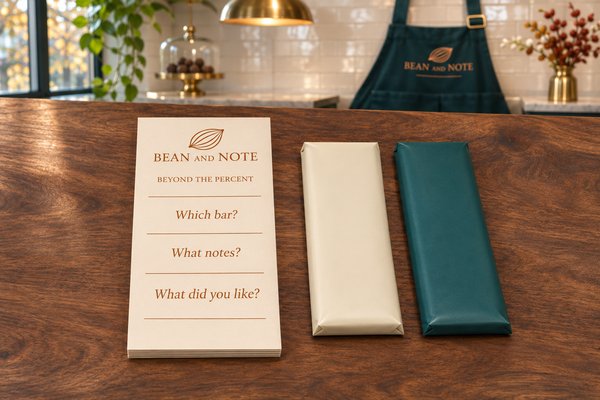
Keep the printed guide useful
DecentCustom lists a 3.74 × 8.27-inch flat rack card with 14pt standard cardstock and glossy finish as default options. Other stock and finish combinations have separate specifications.
Use the card for stable questions and a route to your current selection. Confirm artwork, trim, bleed, size, stock and finish before ordering. Ask about the chosen finish if handwriting is planned. No display holder is listed in the card’s package.
Explore related custom marketing materials or other custom products from DecentCustom after deciding which information your customers need to keep.
Questions about chocolate percentages
Does 70% cacao mean 70% cocoa powder?
No. The figure includes cacao-derived components such as cocoa butter, rather than describing cocoa powder alone. It also does not show the precise split between those components.
Will every 70% chocolate taste equally bitter?
No. Chocolates with the same percentage can differ in composition, beans and the maker’s approach. Compare the actual products and your preferences; use the number as one piece of information.
Is everything outside the cacao percentage sugar?
Not necessarily. Other ingredients depend on the product. Read its ingredient list, and check the basis of the stated percentage when the bar contains additions or filling. Do not calculate an exact sugar amount from the front-label percentage alone.
Research note: an original June 2021 question about two different 70% bars helped identify the buying problem. It is one person’s account, not a customer survey. Sources and the product listing were checked November 7, 2026.