
You have been invited to someone’s home and want to stop at a kosher food market for a gift. Wine, chocolates, or a bakery box all look thoughtful. The harder question is whether your host wants that particular item, can use it as intended, and would welcome it at the time you plan to arrive.
Ask three things before shopping: Would you like me to bring anything? Is there an exact item, brand, or shop you prefer? When would you like me to drop it off? A specific answer is more useful than guessing from a general “kosher gift” list. If the host says nothing is needed, accept that answer.
This is a shopping and communication guide for guests and market staff. Jewish households follow different practices; it is not a list of gifts that every kosher household must accept.
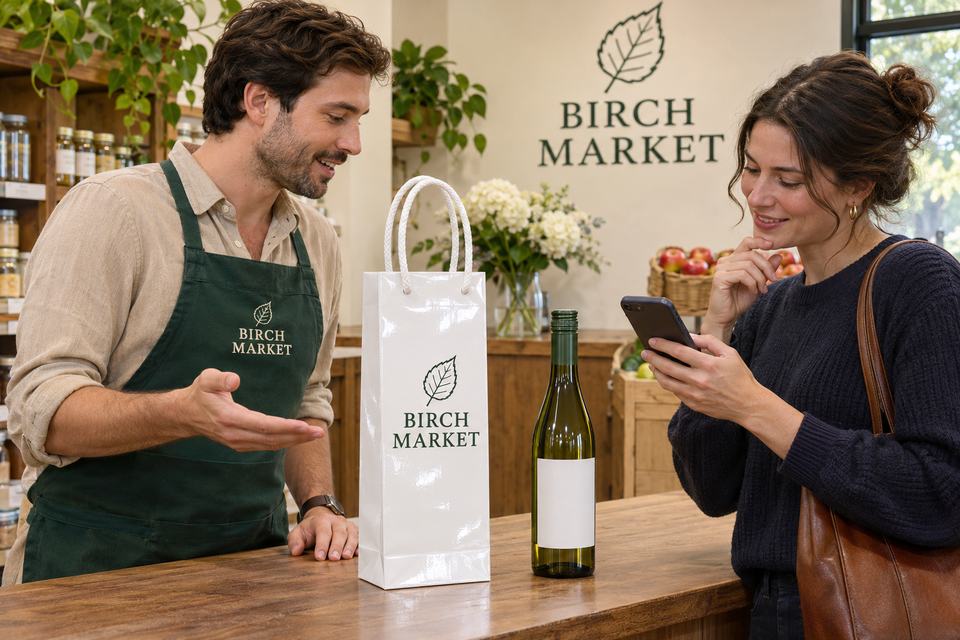
Why a good intention can still leave you unsure
In a September 2026 guest discussion, someone invited to an observant friend’s Shabbat lunch worried that bringing a present might be inappropriate, while arriving without one might seem rude. It is one person’s question, not a survey of Jewish hosts. But it captures a real decision: the gift and its handoff both need to fit the invitation.
Published guest guides also serve different settings. OneTable’s guesting tips encourage asking whether you can bring something and offer general host-gift suggestions. Chabad’s Shabbat dinner guide says a gift is not necessary and discusses arranging a gift before Shabbat or thanking the host afterward. Neither replaces a conversation with your own host.
1. Is this a host gift or a contribution to the meal?
Ask what would actually help. A gift for the host to enjoy another day is different from a dessert you expect everyone to eat that evening. Do not arrive with an unrequested course and assume the host will reorganize the menu around it.
A simple message works: “Thank you for inviting me. Would you like me to bring something for the meal, a small gift for another time, or just myself?” This gives your host room to say what they need, including nothing.
If they ask for a dessert or drink, find out the exact choice before buying. My Jewish Learning’s guest guide specifically advises asking about kosher requirements and the meal when bringing edible items to be served. The practical shopping lesson is to let the host identify the fit rather than treating every kosher-labeled dessert as interchangeable.
2. Which exact product would you welcome?
“Something kosher” may still leave a guest guessing. Ask whether there is a familiar product, brand, bakery, or local store the host uses. If they have a particular certification preference, let them describe it or send a product photo. You do not have to become an expert in their household’s practices to follow a clear request.
At the market, show staff the specific item or photo and ask for that version. Check the flavor and package size as well as the brand. If it is unavailable, ask the host about the proposed replacement instead of quietly substituting a similar-looking product.
For a bottle gift, first confirm that a beverage is wanted. Do not assume everyone drinks wine, or that any wine sold at a kosher market matches the host’s preferences. An exact host-requested bottle of grape juice may be a better choice in one household; another host may prefer no food or drink gift at all.
Keep the original package and its information with the gift. Decorative wrapping should not replace the maker’s label or turn a shop’s branding into a certification claim. For a mixed gift basket, make sure the contents are what the recipient requested before choosing the presentation.
3. When and how should I hand it over?
Ask about the gift separately from the dinner arrival time. A host may prefer an earlier drop-off or a thank-you after the visit. Agree on a practical time that suits them, rather than using a generic Friday deadline.
Even a nonfood choice can need a conversation. A first-person guest guide on ReformJudaism.org notes that flowers can create preparation difficulties in an observant home. That is a useful counterexample to advice that flowers are always the effortless answer. Ask what the host would welcome and how they would like to receive it.
If your visit is part of upcoming holiday plans, settle these details before the shopping trip. Hebcal lists Hanukkah 2026 from sundown on December 4 through nightfall on December 12. An invitation during that period still needs its own arrangements; a holiday date does not tell you the host’s gift preferences or your local handoff time.
A gift choice that is actually ready to buy
Fictional example — Jamie’s shopping note:
Purpose: a small gift for the host, not an extra course.
Requested item: one sealed bottle of the grape juice shown in the host’s photo, same brand and size.
Substitutions: ask first; do not swap brands without an answer.
Handoff: Thursday at 6 p.m., specifically agreed with this host.
Jamie shows the photo at the kosher market. Staff locate the matching bottle. Jamie checks that the product and size match, keeps the original label intact, and uses a suitable existing carrier for the agreed drop-off. The gift is settled because the host’s request, the purchase, and the handoff agree. Thursday at 6 p.m. is an invented arrangement for this example, not a religious or retail deadline.
If the host has not answered: Jamie does not turn uncertainty into a guess about wine, dessert, or a gift basket. Jamie attends as invited and follows up with a warm thank-you, asking about a suitable gift later if appropriate. If the host has already said “please just come,” Jamie accepts it. Buying nothing for that visit can be the completed decision.
For market staff: finish the choice before the wrapping
When a guest is uncertain, ask whether the recipient requested an exact item and whether the gift is intended for the meal. Help locate the named product and flag a mismatch before suggesting substitutions. Staff can explain their products; the host decides what suits their household.
A short handoff note can keep the request clear: “One bottle matching customer’s photo; no substitution confirmed; customer arranging drop-off with host.” Keep personal delivery details off public packaging. The customer’s own note is enough; a custom carrier is an optional finishing touch after the contents are chosen.
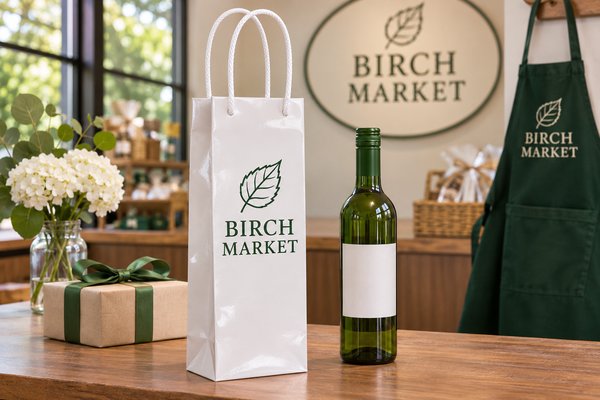
Custom paper bags for a host-requested bottle gift
DecentCustom’s custom paper wine bags, SKU decentcustom-to-000029, list 157 GSM glossy laminated paper, matching macramé handles, a fold-over top, and a cardboard bottom insert. Nominal dimensions are 5.25 W × 3.25 D × 13 H inches. Check your actual bottle and usable bag space before choosing a format.
Compare custom paper gift bags for other presentations, or explore custom products from DecentCustom for coordinated market branding.
Kosher host-gift questions
Do I need to bring a gift to a Shabbat meal?
Ask your host rather than assuming. A gift can be a kind gesture, but it should fit their invitation and practices. If they say nothing is needed, accept that. A sincere thank-you afterward is a useful option when a gift or its timing is unclear.
Is wine or chocolate always an appropriate kosher gift?
No single category suits every recipient. Ask whether food or drink is wanted and which exact product or shop they prefer. If it is intended for the meal, confirm that use too. Do not replace an unavailable requested item without checking the proposed alternative.
What if I cannot drop off the gift before the visit?
Ask the host about another arrangement, such as a later thank-you. Do not infer gift timing from the dinner start time or arrive with an unexpected delivery. Follow the arrangement you make with that household.
A thoughtful gift begins with a useful question. Choose the item your host actually welcomes, agree on its handoff, and let the packaging support that choice.