
The round loaf in the bakery window looks wonderful. But if you want matching slices for tomorrow’s sandwiches, its shape deserves as much attention as its crust. A loaf chosen for a shared dinner can have a different job from the bread you put in a lunch box.
Boule vs. batard vs. sandwich loaf: a boule is round, a batard is oval, and a pan loaf takes its form from a bread pan. Start with the slices you want, then ask about the bakery’s actual recipe, loaf size, and slicing service. Shape alone does not tell you whether the bread is sourdough, what it tastes like, or how much bread you are buying.
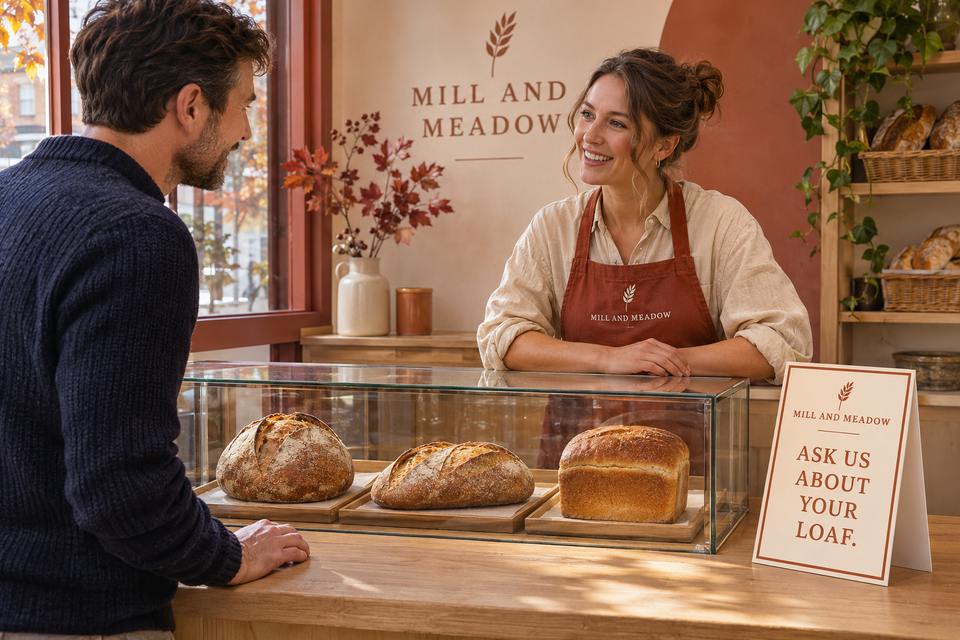
Why the prettiest loaf may not be your everyday loaf
In a November 2024 bread-shape discussion, a home baker described the frustration of getting very narrow and very wide slices from a round loaf. Other participants valued the round loaf’s appearance or preferred a pan loaf for everyday use. That is a useful disagreement, not a vote on which bread is best.
The same question helps at a bread bakery: what do you want this loaf to do? If you need similar sandwich slices, ask to see the outline of a slice from the available loaves. If you are choosing bread to share alongside dinner, matching slices may matter much less. Neither choice makes you a more or less serious bread buyer.
A quick guide to the names on the bread board
King Arthur Baking’s glossary defines boule as a round loaf and batard as an oval loaf. These are useful shape words. Read them alongside the rest of the product name rather than treating them as complete descriptions.
Boule: the round loaf
A round outline means slices can change in width as you move across the loaf. Look at the loaf on display and ask how its slices will suit your plan. A boule can work for sandwiches; it simply may not give you the repeated rectangular shape you had in mind. For a shared bread plate, variation may be perfectly welcome.
Batard: the oval loaf
A batard is longer than it is wide, with ends that may be rounded or tapered. Its middle can offer a run of more similarly sized slices, while the ends still differ. Do not assume every oval loaf fits the same toaster, sandwich container, or serving plan. Ask about the loaf in front of you.
Pan loaf: a useful place to start for regular slices
A pan loaf has sides formed by its baking pan, often giving it a more rectangular profile. If regular sandwich slices are your priority, compare this option first. The top can be domed or flat, and the recipe still matters. “Pan loaf” does not automatically mean soft white bread, just as “artisan” does not automatically mean round.
Separate the loaf’s shape from the bread itself
A bakery may offer a familiar bread in more than one form. On King Arthur’s bakery menu, Vermont Country appears as a pan loaf and a batard, while its Five Seed Sourdough appears in pan and boule forms. The menu also describes particular French loaves differently. The practical lesson is to read the whole description, not infer a recipe or texture from one shape word.
Acme’s bread range likewise lists sourdough in several shapes and a separate pain de mie pan bread. These are examples from those bakeries, not a promise about your local shop’s inventory or recipes. Ask: “Do you make this bread in another shape, or would that be a different bread?”
If you are choosing for a particular flavor or texture, say so directly: “I want the bread I bought last week, but in a shape that works better for sandwiches.” Staff can tell you whether that exact bread comes in another form or whether the alternative changes more than its outline.
Ask about the slice before asking for the bag
Try this at the counter: “I’m buying bread for lunch sandwiches. Which of today’s loaves gives me the slice shape I need, and can you slice that loaf for me?” If the bakery has a sample slice, compare it with what you intend to make. If it does not, ask staff to describe the usual slice size and available cut.
Keep the bread name, loaf size, and slicing request together. “One sourdough” leaves more room for misunderstanding than “one of this sourdough pan loaf, sliced if that service is available.” Ask about offered thicknesses instead of assuming that “thin” means the same thing to everyone.
Slicing service is local. Great Harvest Charlotte’s FAQ distinguishes its round and toaster shapes and explains that some products cannot be machine-sliced. Its specific sizes and service arrangements apply to that bakery. Confirm what your shop can do; an attractive display loaf is not a guarantee of an available slicing option.
Two purchases, two sensible answers
For weekday sandwiches
Fictional example: Maya likes the look of a round country loaf, but wants similar slices for lunch boxes. She asks whether the same country bread comes as a pan loaf. Staff show the available pan version and a sample slice. Its outline suits her lunches, and the bakery confirms it can slice that loaf. Maya chooses the pan version rather than buying the boule and hoping all its slices will match.
If that version were unavailable, Maya would compare another offered loaf and its description, or choose another purchase time. She would not assume an oval replacement was the identical recipe.
For a shared dinner
Fictional example: Luis wants bread alongside a family dinner and is happy with varied slice sizes. He compares the bakery’s round and oval versions, asks about the actual loaf size, and chooses the round bread he prefers. Staff confirm his request to leave it whole. A regular sandwich profile is not part of his goal, so there is no reason to buy a pan loaf just because it is practical for someone else.
The Bread & Butter Project’s shape guide, from an Australian bakery, also starts with the meal you want to create. That is a useful question across locations; its own breads and serving suggestions are not a description of every US bakery.
For bakery owners: make the first question easier
A customer should not need French bread vocabulary before asking for help. Put plain shape descriptions beside the actual bread names, and keep current loaf sizes and slicing options easy to ask about. A short staff question—“Sandwiches, toast, or something to share?”—can start a useful conversation without declaring one shape superior.
A handwritten shelf note or a clear verbal explanation may be enough. If you want a consistent branded prompt at the counter, use a simple message such as “Ask us about your loaf.” Keep changing availability in a current menu or staff conversation rather than printing an offer your bakery cannot always provide.
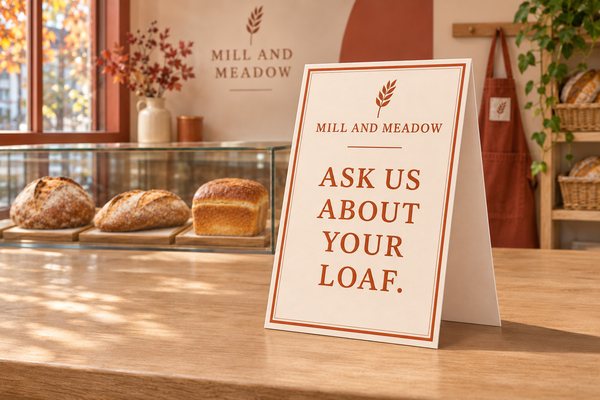
A small counter prompt for bread questions
DecentCustom’s custom bakery table tents, SKU decentcustom-mm-000008, list a 5 × 7-inch format, 14pt card stock, and full-color printing. The folded display stands without a separate holder. Check your artwork, readable type size, and current finish options before ordering.
Explore custom marketing materials for other printed formats, or browse custom products from DecentCustom for coordinated bakery branding.
Questions people ask at the bread counter
Is a boule always sourdough?
No. Boule describes a round shape. Read the complete bread name and description, and ask the bakery about that particular loaf. A round outline does not identify its ingredients or how it was made.
Is a batard always better for sandwiches?
No. An oval loaf can offer convenient middle slices, but its ends, size, texture, and recipe still vary. Compare the actual slice with your intended sandwich. A pan loaf is another useful option when a regular profile matters most.
Can I buy the same loaf whole or sliced?
Ask that bakery about that product and visit. Some shops offer slicing for selected loaves or at particular times; others may have fewer options. Confirm the bread name, size, and slicing request together before checkout.
Choose the bread for the way you will use it. A round loaf for dinner and a pan loaf for lunches can both be excellent purchases when their shape, recipe, and available service match your plan.