
WINE SHOPS · UNDERSTAND THE DESCRIPTION, FIND YOUR STYLE
Fruity wine is not necessarily sweet wine. “Fruity” describes aromas and flavors that remind you of fruit. “Dry” and “sweet” describe sweetness, which is associated with residual sugar. A dry wine can have pronounced berry or peach notes. A mouth-drying grip is another characteristic, often associated with tannin; it does not tell you the wine’s sweetness by itself.
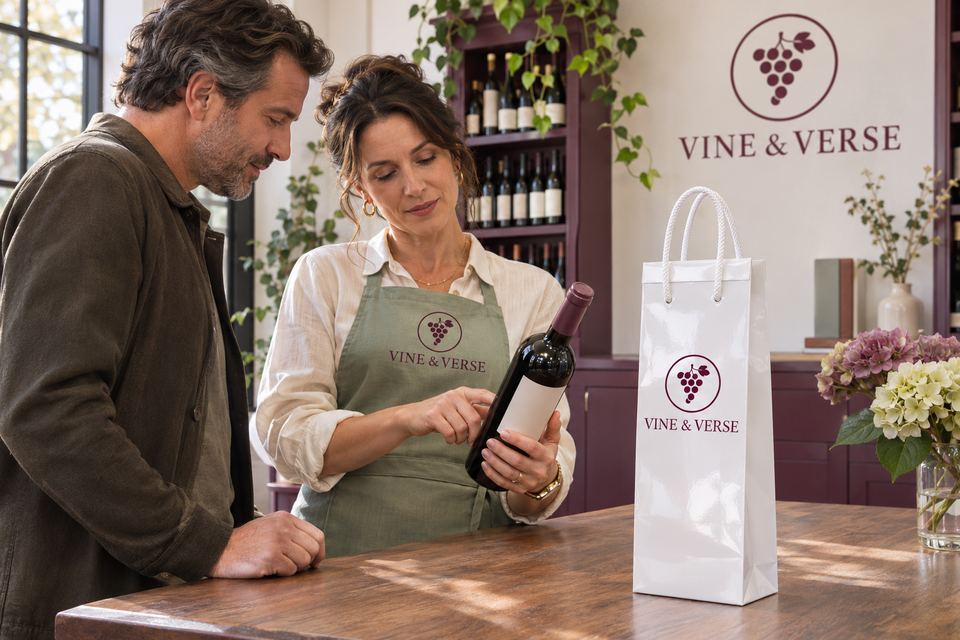
Why “I don’t like fruity wine” can send you to the wrong shelf
You may dislike noticeable sweetness while still enjoying fruit aromas. Or you may want less ripe fruit, more savory character, or less grippy texture. Those preferences lead to different recommendations. Telling a specialist what you experienced is more helpful than trying to use the “correct” word.
Wine Spectator’s answer to a reader’s fruity-versus-sweet question recommends clarifying the meaning with an example or a recently enjoyed bottle. That is a practical approach at the shop counter: start with something concrete, then let the specialist help translate it.
Four different things a wine description may be telling you
| Characteristic | What it refers to | A useful question |
|---|---|---|
| Fruit character | Aromas or flavors reminiscent of fruit, such as citrus or berries. | “Does this have prominent fruit character, and what kind?” |
| Sweetness | How sweet the wine tastes; residual sugar is relevant. | “Is this particular wine dry, slightly sweet or clearly sweet?” |
| Tannin and grip | A mouth-drying or grippy sensation, rather than a measure of sugar. | “I found my last red too grippy. Is this one softer in texture?” |
| Acidity | A tart, mouthwatering impression that affects the overall balance. | “I liked the fruit but found the last bottle too sharp. How does this compare?” |
WSET’s explanation of wine components distinguishes residual sugar, aromatic compounds, acids and tannins. Think of them as separate clues that combine in the glass. You do not need to memorize chemical names or sugar thresholds to explain a preference.
Wine Folly’s tasting-term guide also separates fruit character from sweetness. A description that mentions ripe berries is not a promise of noticeable sugar. Equally, a dry classification is not a promise that a wine will feel gentle, light or low in acidity.
Translate what you mean into a useful shop request
- If you want fruit without obvious sweetness: “I’d like a fruit-forward wine that is dry. Could you confirm the sweetness of this bottle?” Add a texture preference if you have one.
- If “dry” has meant a rough feeling to you: “My last red left a grippy feeling on my gums. I’d like less of that, but I do not necessarily want a sweeter wine.”
- If you actually enjoy sweetness: “I’d like some noticeable sweetness, rather than just a fruity aroma. Which specific bottle fits that?” There is no need to disguise this preference as something else.
A wine-community question about fruity, dry reds combines several of these needs: the writer wanted fruit character while avoiding harsh tannins and certain earthy notes. It is one buyer’s experience, with local availability issues, rather than a universal shopping list. The useful lesson is to describe each wanted and unwanted characteristic separately.
Confirm the bottle instead of relying on a grape name
Grape names can help narrow the conversation, but they do not give a complete description of every bottle. Producer, place and winemaking choices matter. For example, do not assume every Riesling will have the same sweetness. Ask about the named wine in front of you.
Bring a photo of a previous label and explain what you liked or disliked. Note the producer, wine name and vintage when available so the shop can identify it. Ask what the proposed alternative shares with that wine and where it differs. If the description does not make the sweetness clear, ask the seller to verify it from current product information.
Two shoppers, two different goals
Alex wants a red with berry character and less grip. Alex initially asks for “something less dry,” then explains that the problem was a rough mouthfeel, not a lack of sugar. The specialist separates the questions and suggests a dry, fruit-forward option described as softer in texture. Alex checks those characteristics for the actual bottle and chooses one to explore rather than buying a case based on the grape name alone.
Devon wants a wine with noticeable sweetness. A previous “fruity” recommendation smelled appealing but was not sweet enough for Devon. This time Devon explicitly asks for sweetness and has the shop confirm it for the selected wine. Devon chooses the bottle on that basis instead of taking another dry wine simply because its description includes ripe fruit.
These are fictional examples, not tasting results. They illustrate different valid preferences; neither bottle style is an achievement level that a wine drinker must reach.
A clearer question to use at the counter
“I’m looking for a dry red with noticeable berry character. The last wine I tried felt too grippy, so I would prefer a softer texture. I’m shopping for dinner, not a sweet dessert wine. Could you confirm this bottle’s sweetness and explain how its tannin and acidity compare with the label in this photo?”
Adapt the example to your own experience and tell the specialist your budget. If you are buying for someone else, confirm that wine would be welcome and ask about their preferences instead of using your own as a substitute. Keep the final bottle’s identity with the gift so it can be recognized later.
Finish the choice with clear presentation
For wine-shop owners, a short note recording the selected bottle and the customer’s stated preferences can help a later conversation. Gift presentation should follow the selection. It cannot communicate a wine’s sweetness on its own or replace the original product information.
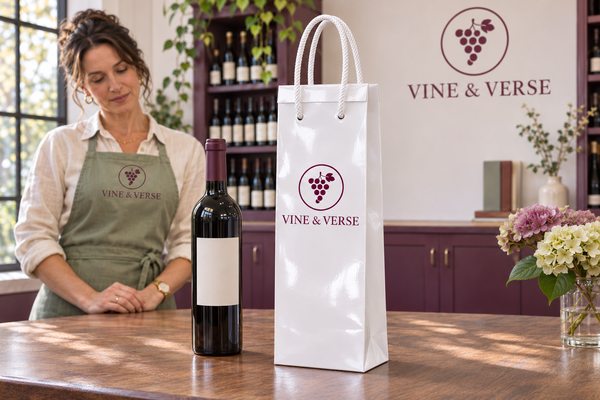
A branded outer gift bag
For an optional retail presentation, explore custom paper wine bags. This product lists 157 GSM glossy laminated paper, matching macramé handles, a fold-over top and cardboard bottom insert. Listed dimensions are 5.25W × 3.25 × 13H inches.
Check the actual bottle and any additional packaging for fit before ordering; the illustration does not establish fit or carrying capacity. Browse custom paper gift bags for other presentations, or see custom products from DecentCustom for additional shop branding needs.
AI-generated product-and-shop illustration. The white paper bag follows the pictured product style; the scene does not prove dimensions, load capacity or print results. The separate bottle is a prop.
Wine-shop questions, answered
Can a dry wine still taste fruity?
Yes. Fruit character and sweetness describe different characteristics. A dry wine may have pronounced aromas and flavors reminiscent of fruit without noticeable sweetness. Ask about the actual bottle’s sweetness rather than deciding from fruit words alone.
Does a wine that dries my mouth have less sugar?
Not necessarily. A drying or grippy sensation can be associated with tannin. Explain that sensation to the shop separately from whether you want sweetness. “Less grippy” and “sweeter” are different requests.
Can I tell whether wine is sweet from the grape variety?
A grape variety is a clue, not a complete answer for every wine. Check the specific producer and bottle description, and ask the seller to confirm its sweetness if unclear. Also describe the fruit character and texture you want so sweetness is not doing all the work.
Research checked November 13, 2026. An adult shopping and retail communication guide, with no health, dietary or availability guarantees.