
FUDGE & TAFFY SHOPS · LOOK BEYOND THE NAME
Salt water taffy is not made with ocean water, and the name does not guarantee a particular salty taste. Recipes and flavors differ by maker. Some makers add salt; others describe recipes without added salt. Choose from the actual flavor description and current ingredients, rather than treating “salt water” as a taste rating.
You spot a pastel gift box at a fudge and taffy shop. It looks like the candy from a childhood beach trip, but you cannot remember the flavor. Is every piece salty? Is it just another name for toffee? Will another brand taste the same?
These are useful questions to ask before buying a gift. This guide separates the name from the product, then gives you a practical way to describe what you want and remember what you enjoyed.
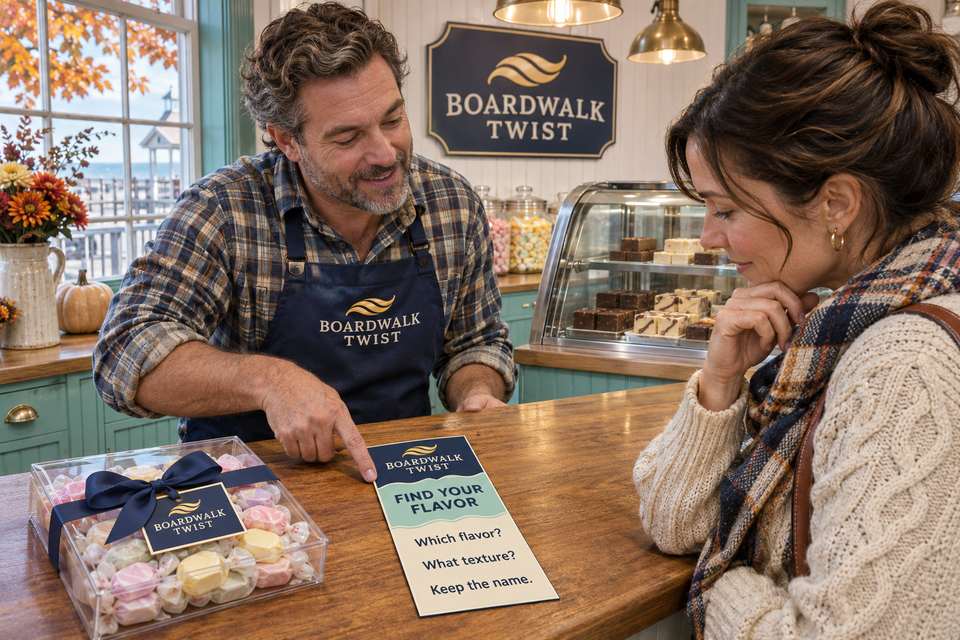
Does salt water taffy contain sea water?
No. The Old Mill explains the salt water name while distinguishing the familiar seaside stories from the actual candy. It also notes that recipes vary: some include salt, others do not. The name alone does not tell you which recipe is inside your box.
The storm-and-boardwalk story is often repeated, but it should be presented as a legend rather than a verified account of every historical detail. You can enjoy the boardwalk association without using it to infer ingredients or flavor.
Why “not made with sea water” does not mean “no salt”
These are different statements. Cabot’s Candy describes adding Cape Cod sea salt to its own saltwater taffy. In contrast, Zeno’s explanation says its recipe has no salt added. Those descriptions apply to the makers discussing their products; neither establishes a rule for the whole category.
For a shopper, the useful distinction is between a broad candy name, a specific flavor such as sea salt caramel, and the ingredients listed for that exact item. Do not turn “no added salt” in a blog into a salt-free or nutritional claim. If an ingredient requirement matters, check the current label and ask the seller directly.
Is all taffy made and described the same way?
No. The Exploratorium explains how pulling introduces air into taffy. That helps explain a familiar description of this candy, but it is not a promise that every maker uses an identical process or produces the same texture.
Taffy Town describes its own whipped approach alongside the traditional pulling method. A shopper comparing brands should therefore ask about the actual candy instead of assuming that the category name guarantees a particular chew.
Likewise, taffy and toffee have similar-sounding names but are not interchangeable shopping requests. Cabot’s guide explicitly distinguishes them. If you want a particular texture, describe it to the shop and ask which current item matches; a remembered word or wrapper color may be insufficient.
Four questions before choosing your box
| Look at | What it cannot tell you alone | Useful question |
|---|---|---|
| The candy name | “Salt water” does not establish salt intensity. | “How do you describe this specific flavor?” |
| The flavor name | A familiar name may differ across makers. | “Which current item fits the flavors I enjoy?” |
| The texture description | The category does not promise an identical chew. | “How does this compare with the exact product I know?” |
| The box description | A photo does not establish the included flavors or quantity basis. | “What is included in this option, and is it listed by weight or pieces?” |
Ask for the current selection and read the item you are ordering. A mixed box can be a good discovery format, but it does not automatically reproduce a past favorite. An approximate piece count, where provided, should also remain an estimate rather than a guarantee of how many people the gift serves.
Two useful buying decisions
These examples are fictional. Names, descriptions, availability and preferences illustrate a decision, not real offers or tested tastes.
Kelly wants a sweet vanilla gift. The recipient likes the shop’s Vanilla Twist but has said they dislike salty caramel flavors. Kelly initially reaches for a mixed box because it says “salt water taffy.” After checking the actual assortment, Kelly sees that it includes Sea Salt Caramel. The shop offers a named Vanilla Twist box, so Kelly chooses that listed option and confirms its included weight and packaging. The broad category name did not settle the flavor choice.
Robin remembers a pink piece from a beach trip. They do not know the maker or exact flavor, and the current shop cannot identify it from color alone. Robin describes the fruit flavor and texture they remember. The shop recommends its currently available Berry Twist and explains the expected profile. Robin chooses that named product as a new option, rather than assuming it is the original candy, and keeps the label to record their own reaction afterward.
Keep a note that helps next time
Fictional completed flavor note
Shop / item: BOARDWALK TWIST — Berry Twist.
Why I chose it: the shop described a berry flavor and a chewy texture.
My reaction after trying it: liked the berry flavor; next time compare with the shop’s current vanilla option.
Keep: the full product label and exact name, rather than only a photo of the candy.
A description helps you choose; your own note records what you experienced. Keep the two separate. If a favorite is unavailable, ask about a named alternative and decide whether that difference suits you. “Same color” or “same category” is not enough to establish a substitute.
For shops: answer the name question before the gift decision
A current label and a short staff explanation may be enough. If customers want a takeaway buying guide, custom rack cards for fudge and taffy shops can carry stable questions, your shop identity and a route to your current flavor list.
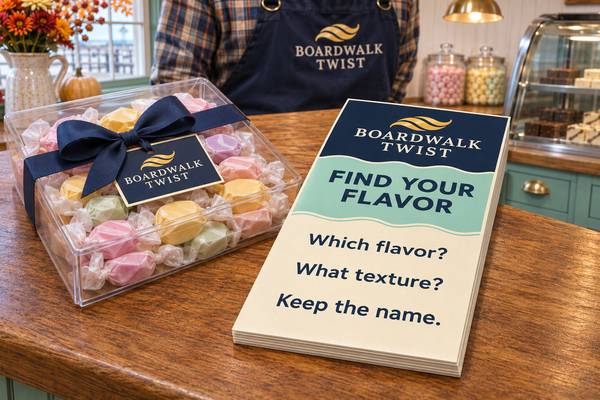
A guide to keep with the product name
DecentCustom lists a 3.74 × 8.27-inch flat rack card with 14pt standard cardstock and glossy finish as default options. Other stock and finish combinations have different specifications; a display holder is not listed in the package.
Confirm size, stock, finish, artwork, trim and bleed before ordering. Ask about the finish if handwriting is planned. Keep changing availability and ingredient details with your current product information.
Explore related custom marketing materials and other custom products from DecentCustom after deciding what customers need to remember.
Salt water taffy questions
Is salt water taffy supposed to taste like sea water?
No. It is not made with ocean water. The name does not specify a taste intensity; check the exact flavor and the maker’s description.
Does every salt water taffy contain added salt?
No single rule covers the products compared here. Makers describe different recipes. Read the current ingredients for the exact candy; the category name is not a salt-free or nutritional claim.
Are taffy and toffee the same candy?
No. Their similar names can cause confusion. Ask for the actual product and describe the flavor and texture you want instead of treating the names as interchangeable.
Research note: an original April 2022 question about a salty taffy order identified a real wording confusion. It is one self-reported UK experience, not a customer survey or a finding about all brands. Sources and the linked print product were checked November 7, 2026.