
You buy a beautiful loaf from an artisan sourdough shop, expecting a sharp tang. At home, it tastes surprisingly gentle. Or the opposite happens: you wanted everyday bread, and its sourness dominates every bite. The next purchase can start with a better description of what you enjoy.
Is sourdough supposed to be sour? It can be mildly tangy or noticeably sour. The name does not promise one intensity. Ask the bakery which specific loaf suits your preference, compare it with a bread you already know, and keep the exact loaf name for next time. Stronger sourness is a flavor choice, not an automatic upgrade.
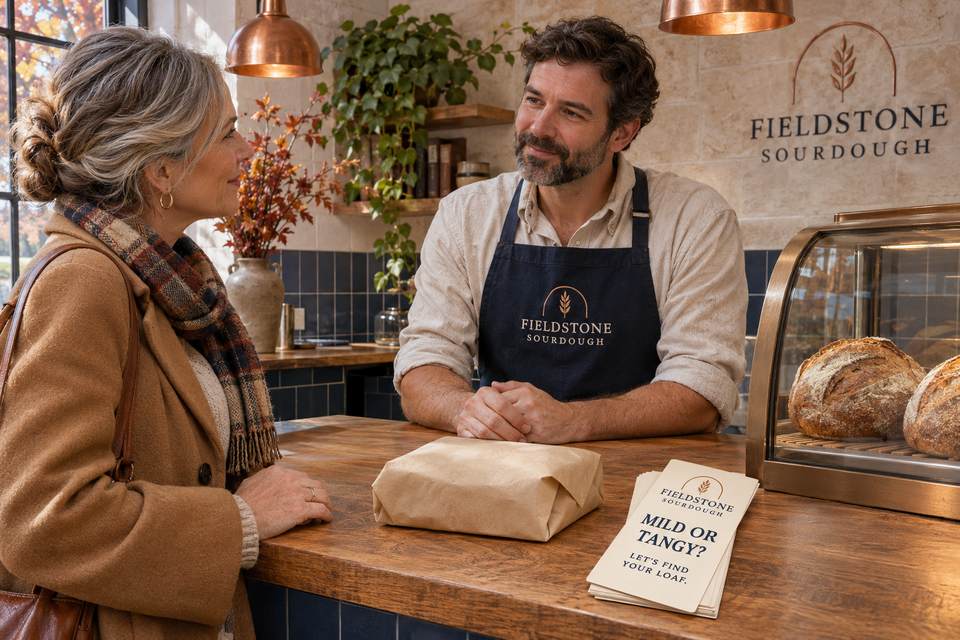
Why the word “sourdough” can leave buyers guessing
In a May 2026 San Francisco bread discussion, a shopper asked which loaf to choose after finding a purchase much less sour than expected. Replies reflected different preferences and experiences. One person’s disappointment is not a verdict on a bakery, but it identifies a useful question: “Which of your breads has the tang I am looking for?”
Bakers can intentionally make gentler sourdough. In King Arthur Baking’s guide to sour or mild bread, Barb Alpern describes a naturally leavened Pain au Levain with mild tang, then explores milder and more assertively sour versions. For a shopper, the important point is that a mild flavor can be intentional. You do not need to change a recipe yourself to ask for the version you prefer.
Describe the flavor you want in ordinary words
You do not need a tasting vocabulary worthy of a competition judge. Tell staff what happened with your last loaf and what you want to change. These three descriptions start different conversations:
- “I want less sourness.” You enjoyed the bread but want a gentler tang. Ask which available loaf is milder than the one you tried.
- “I want a clearer tang.” You want sourness to be a noticeable part of the flavor. Ask for a comparison with the bakery’s other loaves, rather than simply asking for its “best” sourdough.
- “I want more flavor, but not more sourness.” You may enjoy the grain, crust, or other ingredients without wanting a sharper bite. Say which part you liked so staff do not interpret “more flavor” as “more sour.”
Keep texture separate too. A chewy loaf and a tangy loaf are not the same request. If the crust or chew bothered you, mention that as its own preference. Otherwise, you might buy a milder loaf and discover that you have not changed the feature you actually disliked.
Read the exact loaf description, not just the bakery name
A bakery may describe different sourdough products differently. Bread Alone calls its French Sourdough mildly sour, while its San Francisco Sourdough has a tangy flavor. Both product pages identify the breads as 100% sourdough. Those are descriptions of those particular products, not a universal rule that every French-style loaf is mild or every San Francisco-style loaf is intensely sour.
Other descriptions show why one word is rarely enough. Acme describes its sourdough as slightly acidic and almost fruity. Zingerman’s Bakehouse describes its loaf in terms of pleasant tang and chewy texture. Read those as the makers’ own flavor descriptions, rather than measured scores that let you rank all four breads on one scale.
At your own shop, ask: “Compared with the loaf I bought last time, which of today’s breads would taste milder—or more tangy—to you?” A relative comparison gives staff a clearer starting point than “Is this real sourdough?” when your immediate concern is whether you will enjoy its taste.
A small conversation before another whole loaf
Bring the bread’s exact name, a photo of its label, or a note from your last visit. “The country sourdough from your Saturday menu” is more useful than “the brown one.” Names, available products, and recipes can differ between shops.
If the bakery offers samples, ask whether you can try the option staff suggest. A sample is optional; do not assume every shop has a tasting service or can open a loaf for you. If none is available, ask for the staff comparison and the current product description. You can then decide whether you are comfortable buying that loaf, choosing another offered format, or waiting.
Do not let a stronger flavor become an obligation. If the milder option is the bread you enjoy, that is a useful answer. If you want a much sharper tang than the bakery offers, staff can say so without either of you treating the bread as a failure.
Two different preferences, both resolved
A gentler loaf for breakfast
Fictional example: Elena brings the name of the sourdough she bought last week. She liked its grain flavor but found the tang stronger than she wanted. The baker identifies a milder loaf on the current menu and explains how it differs. A sample is available, and Elena likes it. She buys that named loaf and records the name rather than asking for “the least sour bread” again next visit.
More tang, without guessing from the crust
Fictional example: Marcus liked the texture of a loaf but wanted a more noticeable sour flavor. He asks whether the darker loaf on display is also tangier. Staff explain that its description does not make it a stronger-tang option and that no such alternative is available that day. Marcus keeps the name of the loaf he tried and waits rather than buying the darker one as a guess. Choosing not to buy another loaf completes his decision.
A useful note for next time:
Loaf: the exact name from this shop’s menu.
What I liked: grain flavor and chew.
What I want to change: a gentler tang.
Next choice: the named milder loaf I tried here.
This is Elena’s illustrative reminder, not a standardized tasting score. A phone note or the bakery’s ordinary receipt can serve the same purpose.
For sourdough shops: make flavor descriptions useful
Give staff a shared way to describe the breads you actually sell. Separate tang, grain or added-ingredient notes, crust, and texture. If you call a loaf mild, explain what that means compared with another bread in your own range. Avoid treating a dark crust, a long process, or a rustic appearance as a shortcut for a promised sourness.
A short take-home guide can list current bread names and plain flavor descriptions, with a prompt to ask about today’s choices. Keep it accurate when the range changes. A handwritten note or a menu photo may already do the job; a printed card is an optional way to make the information consistent with your bakery’s branding.
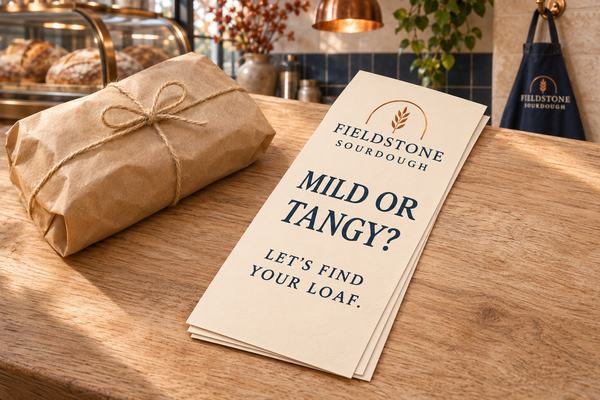
A take-home reminder of the loaf a customer enjoyed
DecentCustom’s custom bakery rack cards, SKU decentcustom-mm-000007, list a 3.74 × 8.27-inch format and full-color printing. The page lists standard 14pt and premium 16pt card stock; confirm the available finish and thickness combination for your design. A display holder is separate from the printed card.
Compare custom marketing materials for other printed formats, or explore custom products from DecentCustom for coordinated shop branding.
Sourdough flavor questions
Can mild bread still be sourdough?
Yes. Naturally leavened sourdough can be made with a mild tang. Ask about the specific loaf if you want to understand how the bakery describes or makes it. Low sourness alone does not tell you its method.
Does a darker crust mean a more sour loaf?
Do not use color as a flavor scale. Ask about the particular bread’s tang and other flavor notes. If a sample is offered, that gives you a more direct way to judge your own preference than appearance alone.
What should I ask if my sourdough was not sour enough?
Name the loaf you tried and ask whether the bakery has a more assertively tangy option. Keep texture and other preferences separate. If no suitable alternative is available, wait or choose another bread you already enjoy rather than assuming any darker or more expensive loaf will be tangier.
The useful question is not how sour bread must be. It is which loaf has the flavor you want—and how to remember that choice when you return.