
You remember the cheese: creamy, a little tangy, exactly what you wanted. You do not remember its name. A photo of a pale wedge and a note saying “9/10” may leave you with the same problem next time you visit the shop.
Save the exact cheese name, maker and shop first, ideally with a readable label photo and the tasting date. Then add a short description in your own words, what you ate it with and whether you would buy it again. Keep facts copied from the label separate from your impressions. Leave missing information marked “unknown” rather than guessing.
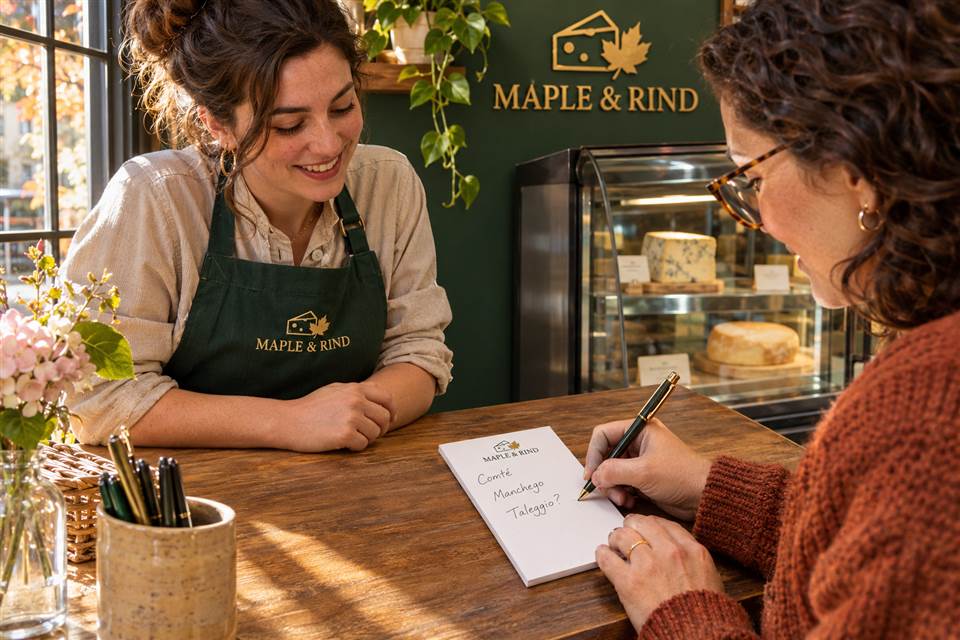
A high score does not tell you what to ask for again
In a May 2023 cheese-tracking discussion, the original poster described the difficulty neatly: there were many favorites, most seemed worthy of a high score, and describing their differences was hard. Replies suggested notebooks, apps and details such as where a cheese was bought. These are individual experiences, rather than a survey of cheese shoppers.
A separate November 2025 identification question came from someone who had bought cheese in Paris and forgotten its name. The discussion shows why preserving identifying information matters. It does not establish that an unlabelled wedge can always be identified from a picture.
For a holiday tasting, a gift selection or an ordinary Saturday purchase, give your future self something more useful than “delicious”: enough information to locate the cheese, plus a reason you wanted it again.
Start with identity, then describe the experience
1. Capture the information you can verify
Before the wrapper or tasting handout disappears, photograph the name and maker so both are readable. Save the shop name and date beside the photo. If a tasting uses numbered samples, match the number to its name while the staff or host still has the list. A sample number alone will mean little after the event.
Ask for the spelling if you only heard the name. When available, record milk type or a stated age exactly as shown. Do not infer them from color, firmness or a familiar-looking shape. “Not recorded” is a useful reminder to ask next time.
The Academy of Cheese tasting guide separates basic information, including the cheese and maker, from sensory observations. Its suggested information sources include packaging, the producer and the cheesemonger. For a shopper’s short reminder, you can keep that distinction without reproducing a professional assessment form.
2. Choose a few words you would recognize later
Describe one feature of the texture and one feature of the flavor or aroma. “Creamy, gentle tang” gives you a different reminder from “crumbly, long savory finish.” You do not need elaborate vocabulary or a word for every sensation.
The Queso Diego tasting checklist illustrates the difference between identifying fields and separate texture, flavor and aroma notes. Treat those as descriptions, rather than a requirement to complete every category.
Record what you noticed. If the shop’s description says “earthy” and you mainly notice tanginess, you can preserve both with clear labels: “Shop description: earthy. My impression: tangy.” Do not turn a flavor word such as “nutty” into an ingredient statement.
3. End with a useful next-purchase decision
Add the context: tasted on its own, with a particular cracker, or alongside a spread. Then finish with a sentence such as “Buy this again for a simple cheese plate” or “Interesting to try; I would choose something milder next time.”
Cheesr’s guide to rating cheese emphasizes personal context and a short explanatory note. A score can be helpful if you use it consistently, but it does not replace the name or the reason for your preference. Someone else’s favorite can be a cheese you would pass over.
Two filled notes—and what each lets you do next
The following cheeses, makers and shop are invented to demonstrate the method. They are not DecentCustom products, real tasting results or claims about a retailer’s stock.
Example A: enough information to look for the same cheese
Identity copied from the example label: Meadow Arc; Northbank Creamery; cow’s milk. Shop: MAPLE & RIND. Tasted November 4, 2026. Label photo saved with this note.
My impression: Soft and creamy, with a gentle tang. Tried on its own, then on a plain cracker. I preferred the plain bite.
Next time: Look for Meadow Arc by Northbank Creamery. Buy again for a small cheese plate; ask what is available if the shop no longer has it.
This entry preserves a specific identity and a personal preference. It can support a focused search or shop question. It does not promise that the cheese will be in stock or that another purchase will taste identical.
Example B: a useful note with an unresolved name
Known: Sample 3 at MAPLE & RIND, November 4, 2026. Exact cheese name, maker and milk type: not recorded. A photo of the tasting handout is saved, but the name beside 3 is blurred.
My impression: Firm and crumbly, with a savory flavor that lingered. Tried with an apple slice; I would like to try it on its own next time.
Next time: Show the shop the dated handout and ask which cheese was sample 3. If the exact identity cannot be confirmed, ask for something with the texture and flavor I described, and record it as a new cheese.
The second note keeps a lead without creating a false identification. Once the shop confirms the name, add it and record who or what supplied the information. If there is no confirmation, keep the original entry incomplete.
Questions about keeping cheese tasting notes
Is a label photo enough, or do I need a journal?
A readable label photo with the shop and date may be enough to locate the cheese. Add a short personal note if you also want to remember why you liked it. Use your phone, ordinary paper or a spreadsheet—there is no need to buy a journal to start.
What if I cannot describe the flavor professionally?
Write familiar words that distinguish this experience for you. Texture, what stood out and whether you would choose it again are useful starting points. Avoid copying a description you did not notice just to make the note sound expert.
Why might the same cheese taste different next time?
The Academy’s guide notes that the same cheese can taste different on repeat tastings. Keep a new dated entry rather than erasing the first. Record the exact product and the context you know; one different experience does not by itself establish a new identity or a quality problem.
A take-home note for a cheese shop
For an owner, a simple handoff is to help the customer retain the exact cheese name and maker, then leave room for their own impression. A label photo or ordinary paper can already do this. Ask whether they want the information; the note does not need to become another form to complete.
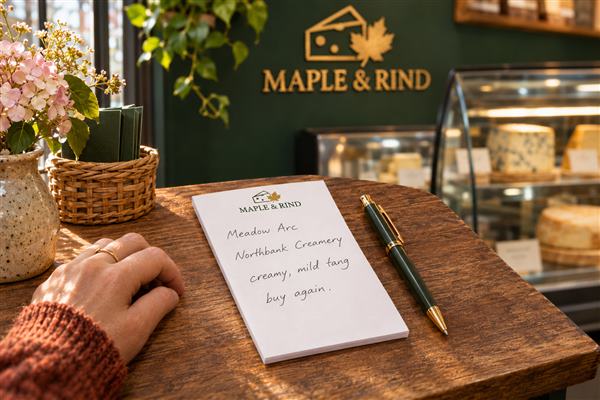
A small branded writing surface
DecentCustom’s custom adhesive notepads list a 4-inch-wide by 6-inch-high paper size, 25 blank sheets per pad and a sticky top behind. The product page supports adding a logo.
This concept uses a modest logo header and leaves space to write. Confirm the artwork, paper option and order quantity before ordering. It is a paper memo pad, not a bound tasting journal, preprinted assessment sheet, cheese wrapper or food-contact label.
Compare other writing formats in custom notepads and notebooks, or browse custom products from DecentCustom if your shop needs a broader set of branded supplies.
Before leaving the shop, check the useful part: can you read the name and maker, find the saved information and explain what you would like to buy—or ask about—next time?