
COFFEE BEAN SHOPS & ROASTERIES · READ THE BAG, CHOOSE THE BREW
Espresso beans are coffee beans, not a separate species. “Espresso” on a bag usually tells you that the roaster selected, blended or roasted that coffee with espresso brewing in mind. It does not set a universal roast level or mean the beans are already ground. To choose well, match the coffee’s actual flavor description and grind to your brewer.
That distinction matters when you receive an espresso-labeled gift but only make pour-over, or when you buy your first bag for an espresso machine. You do not automatically need a different bag because the label looks unfamiliar. You do need to separate three questions: what coffee is in the bag, how the roaster recommends brewing it, and whether it is whole bean or ground for your equipment.
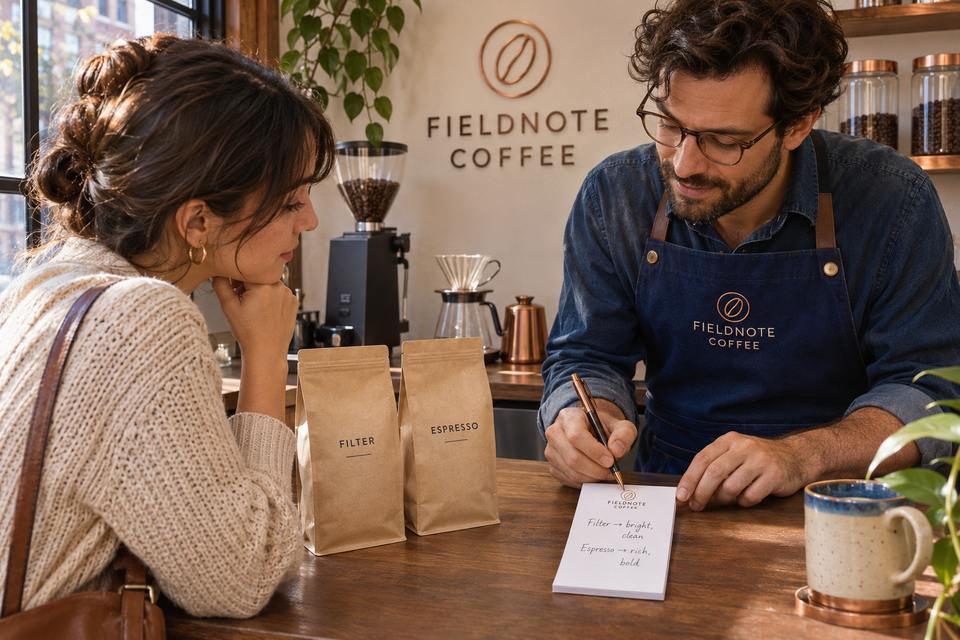
Four clues on a coffee bag that answer different questions
| Clue | What it helps explain | What it does not settle |
|---|---|---|
| Espresso, filter or another brew recommendation | How the roaster expects that coffee to be enjoyed. | A separate coffee species or an exclusive permitted use. |
| Actual roast description | Where this roaster places the coffee in its range. | A universal color or flavor standard shared by every roaster. |
| Whole bean or specified grind | Whether the coffee needs grinding, and for which method it was ground. | That an espresso-labeled whole-bean bag is ready for a portafilter. |
| Flavor notes and blend or origin description | The experience the roaster is trying to communicate. | That every brewing setup will reproduce an identical cup. |
The National Coffee Association’s espresso guide describes espresso as a drink named after its brewing method. Its roast guide also says espresso roast is not a specific roast level and notes variation between roasters’ roast descriptions. Use the label as useful information, then read the rest of the bag.
Does espresso roast always mean dark roast?
No. Many roasters recommend medium or darker coffees for espresso, but that is not a rule that excludes light roasts. Stone Creek Coffee’s explanation gives a concrete counterexample: its seasonal espresso selection includes light roasts. The important question is how that roaster intends the particular coffee to taste and how comfortable you are adjusting your preparation.
Roasting for a method can involve more than choosing a darker end color. In Perfect Daily Grind’s interviews with roasters, Greater Goods co-founder Trey Cobb explains that light espresso and dark filter coffee are both possible, and that roast profiles can differ even with the same finishing temperature. A retailer’s “espresso” recommendation therefore has more meaning than a compulsory dark shade.
You also do not need to reject a blend as inferior to a single origin. King Bean describes blending as a deliberate flavor choice while also discussing single-origin espresso. Ask about the coffee’s intended character instead of treating either category as an automatic quality ranking.
Choose for the brewer you actually own
You make drip or pour-over and already have an espresso-labeled bag
First, check whether it is whole bean. If it is, there is no reason to discard it merely because it says espresso. Have it ground for your actual method, or use your grinder’s appropriate starting guidance. Seattle Coffee Gear’s guide explicitly discusses using espresso-marketed coffee for drip and pour-over.
The result may differ from the filter coffee you usually buy. That is a taste question, not evidence that you used a prohibited bean. If the bag is already ground for espresso, tell the retailer before asking for a filter recommendation; you cannot turn those grounds back into whole beans or make them coarser. Choose a suitable option for your equipment rather than assuming a label change fixes the grind.
You are buying for an espresso machine
Tell the shop what machine and grinder you use, and whether you mostly drink straight shots or milk drinks. Ask for a coffee the staff recommend for that use and your preferred flavors. An espresso-labeled blend can be a sensible starting point, but the darkest bag is not automatically the best one for you.
Confirm whether you are taking whole beans home or asking the shop to grind them. A printed word such as “fine” is a broad description, not one universal setting for every grinder and basket. Use the machine’s guidance and the roaster’s starting advice for the actual coffee, then keep track of your adjustments. This buying guide does not prescribe a single extraction time or recipe.
You are giving coffee to someone else
Find out their brewer and whether they have a grinder before choosing a bag or asking for it to be ground. “They like strong coffee” is less useful than “They use a drip machine and need ground coffee.” If you cannot find out, ask the retailer about an option that leaves the recipient a practical choice. Avoid treating a guess about equipment as a confirmed preference.
Two better decisions than buying by one word
Robin receives an espresso blend but owns a pour-over brewer. The bag contains whole beans. Robin asks the roaster whether its flavor profile suits someone who enjoys chocolate-like, roasty notes, and uses a grind intended for pour-over. Robin tries the existing gift before buying a replacement. If it is not a favorite, the next conversation can describe the actual cup instead of dismissing every espresso-labeled bag.
Casey wants a starting coffee for a new espresso setup. Casey brings the machine and grinder details and asks for a recommendation for milk drinks with a less sharply fruity character. The retailer explains which available coffee fits that request and how to begin with it. Casey buys one suitable available bag rather than collecting a dark roast, a filter roast and a single origin without a plan to compare them.
Robin and Casey are fictional buying examples. Their choices illustrate questions to ask, not tested outcomes or claims that everyone will enjoy the same roast.
A short shop question, followed by a useful note
Ask: “I brew with a drip machine and need you to grind the coffee. I enjoy chocolate-like, roasty flavors and usually drink it with milk. Does this espresso-labeled bag fit that preference, or is there another available coffee you would start with?”
Record after trying it: “Coffee: the bag we chose. Brewer: drip. Grind: the shop’s drip setting. What I liked: the roast flavor remained clear with milk. What I want next time: a little less roast character.”
The second note is an illustrative example of describing a preference, not a sensory test result. In your own note, use what you actually observed. Keep the bag name and brewing method together so the shop has something concrete to work with next time.
For coffee retailers: make the next conversation easier
A customer’s “the last coffee was too strong” can mean several things. A few notes about the actual bag, brewer and preferred drink give your staff a clearer starting point. Keep your recommendation specific and let the customer describe what happened at home. A handwritten slip or digital note may already do the job.
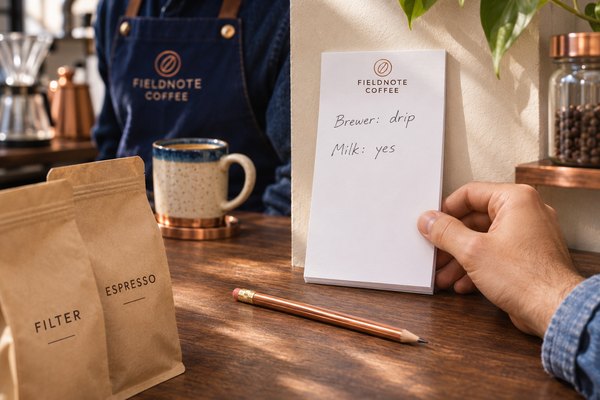
A simple branded place for individual notes
custom notepads for coffee roasters offer an optional way to keep your name with the written recommendation. The linked product is a portrait 4 inch wide × 6 inch high paper pad with 25 blank sheets and a sticky top behind. A logo header can leave room for handwritten details.
Check the artwork proof and current order options. The listed pad is a writing product, not a coffee bag label, a washable counter sign or food-contact packaging. Keep it separate from drinks and brewing equipment.
If that suits a recurring retail need, compare custom office stationery or other custom products from DecentCustom. The useful service remains the accurate recommendation and follow-up, whether you print a logo or use an ordinary note.
Espresso bean questions customers ask
Can I use espresso beans in a drip coffee maker?
Yes, espresso-labeled whole beans can be ground and brewed for drip. Read the actual roast and flavor description, and use a grind appropriate to your brewer. The taste may differ from another bag you enjoy. If the coffee is already ground for espresso, that is a separate equipment-fit question; do not assume all pre-ground coffee has the same grind.
Do I have to buy dark-roasted beans for espresso?
No. Espresso describes a brewing method, and espresso-marketed coffees can have different roast levels. A roaster’s medium or darker blend may be an approachable starting recommendation, while a lighter option may suit another preference and preparation approach. Ask about the specific bag and your setup instead of using darkness as the only criterion.
Does an espresso label mean the coffee is already ground?
No. Check whether the package says whole bean or identifies a grind. Whole beans still need grinding before brewing. If the shop is grinding for you, name the actual brewer and explain your setup. “Espresso” can be the intended brew recommendation on a whole-bean bag; it is not a statement that the contents are ready-ground.
Reviewed November 13, 2026. The cited association, roaster and equipment-retailer guides explain brewing terms and their own recommendations. This article offers buying and communication guidance, not caffeine, health or equipment-performance claims. Availability and personal taste vary.