
PIE & TART SHOPS · A CUSTOMER’S GUIDE
Pie vs tart: start with the crust, then ask what is inside. A classic fruit pie often offers flaky pastry around a generous fruit filling. A sweet tart often has a firmer, cookie-like shell with a shallower filling. Those are useful starting points, but recipes vary. A pie can be open-faced, and a tart can be large enough to share. The bakery’s description of the actual item matters more than the label alone.
You promised to bring dessert. At the bakery, an apple pie and a fruit tart both look inviting. Will the tart taste sour? Does “mini” mean one dessert per guest? And if you loved a lemon pie elsewhere, will this lemon tart give you the same experience?
This guide turns those questions into a more useful conversation at the counter. For shop owners, it also offers a way to write menu descriptions that help customers choose before a busy holiday pickup.
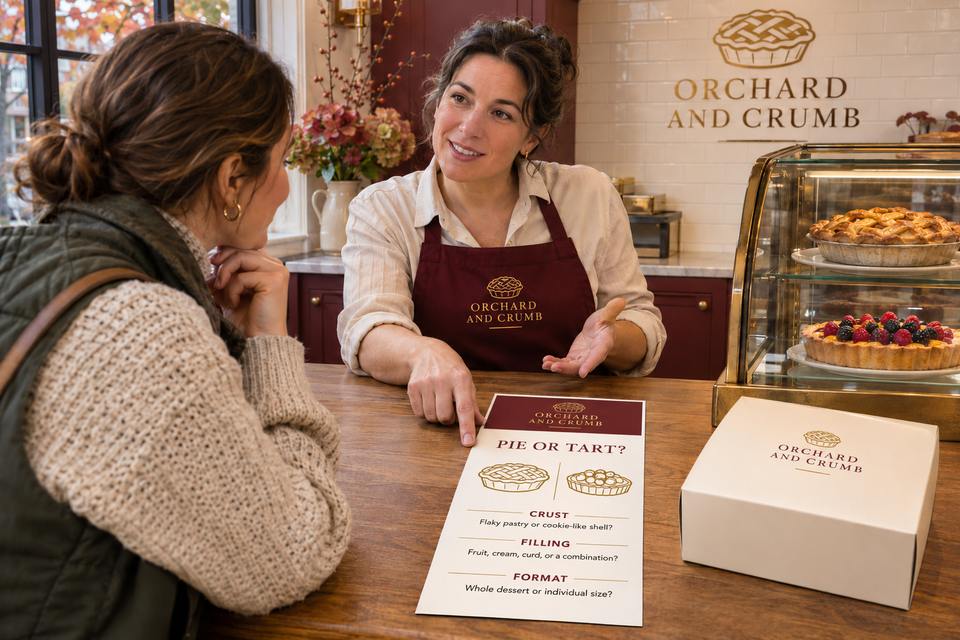
Pie vs tart: what the differences mean when you buy
The Kitchn’s pie-and-tart comparison explains the familiar contrast in crusts and pans. Use it as a vocabulary guide, then check the particular dessert. The following distinctions are clues, rather than rules for judging every bakery.
| What you care about | Common starting point | Ask the bakery |
|---|---|---|
| The crust | Pie: often flaky pastry. Sweet tart: often a crisp, short, cookie-like shell. | “What is the crust like in this specific item?” |
| The filling | Both can feature fruit, custard or other fillings. The same fruit name can describe different layers. | “Is that fruit alone, fruit over cream, or another filling?” |
| The top and presentation | A pie may have a full lid, lattice or exposed filling. A tart commonly has an open top and visible shell. | “Does this one have a top crust, and how is it presented?” |
| The size | Both categories have different formats. “Tart” does not mean miniature. | “Is this a whole dessert, a slice, or an individual piece?” |
A fruit name does not tell you the whole filling
“Apple” tells you the fruit, but not whether you are ordering a deep fruit-filled pie or a shallower tart with arranged fruit. “Fruit tart” might include a layer beneath the fruit that you would not discover from a top-view photograph.
The culinary school ICCA describes fruit tarts with cream or custard beneath fruit. That is one common construction, not a promise about the tart in your local display. Ask for the layers in the item you intend to buy.
A useful question is: “Could you describe the crust and every filling layer in this one?” It gives the baker something concrete to answer. If you are deciding between two desserts, ask the same question about each so that you can compare them fairly.
Ask about texture without turning the name into a guarantee
If you want flaky pastry, say so. If you want a cookie-like shell, say that instead. In John Kanell’s own sweet tart crust recipe, the comparison is with a shortbread-like texture. That makes the distinction easy to picture, while still describing one style of crust.
The Columbus State Community College pastry lesson covers a wider range of tart pastry and sizes. You therefore cannot infer an exact recipe, sweetness level or eating experience just from a fluted edge. Ask about the product; avoid diagnosing it from a photo.
Whole dessert or individual pieces for the holiday table?
Format is a separate choice from pie versus tart. A whole dessert creates a shared centerpiece and requires someone to cut and serve it. Individual pieces avoid that cutting step, but “mini,” “tartlet” and “individual” still need a size description. Two shops can use those words for quite different portions.
King Arthur Baking’s November 4, 2026 article about mini Thanksgiving pies is a timely reminder that pies can be miniature too. It offers a format idea, not evidence that every bakery sells them or that a certain number will satisfy your guests.
Before choosing, ask for the actual diameter or piece size, whether the item comes whole or cut, and the bakery’s serving description. Then consider the rest of your dessert table. A tasting selection after a large meal and a single featured dessert are different plans; neither has a universal piece count.
Two customers, two completed decisions
These examples are fictional. Their menu items and availability illustrate how to choose; they are not offers from a real bakery.
Elena wants cooked apple and flaky pastry. The baker describes today’s Orchard Apple Pie as cooked apple filling inside a flaky double crust. The Mixed Fruit Tart has a cookie-like shell, cream and fruit on top. Elena chooses the Orchard Apple Pie because the actual filling and crust match what she wants. She asks how that whole pie is supplied and served before confirming her order.
Marcus wants individual fruit tarts for a shared dessert table. This fictional shop has only a whole Mixed Fruit Tart today. The baker explains its shell and filling, but cannot supply the individual format Marcus first requested. Marcus knows someone at the gathering can cut and serve a whole dessert, so he chooses the whole tart. If that serving arrangement were unavailable, he would need a different current item or another supplier rather than assuming the bakery can make minis on demand.
For shop owners: describe the item customers will receive
Replace vague words such as “premium dessert” with details a customer can act on. A short description can answer several questions at once:
Fictional menu example
Mixed Fruit Tart — whole dessert
Cookie-like pastry shell, vanilla cream and arranged fruit.
Supplied whole for cutting and serving at your table.
Ask us about the current size and fruit selection before ordering.
The wording separates the dessert’s construction from its format. Keep it aligned with the current recipe and offering. If the fruit selection or available size changes, update the description before using it in a customer’s order. A photograph can support that explanation; it cannot replace it.
A small printed guide can carry the comparison home
A clear menu and a helpful conversation may be all your shop needs. If customers want something to take away, custom rack cards for pie shops can present a short crust–filling–format guide alongside your shop name and current ordering route.
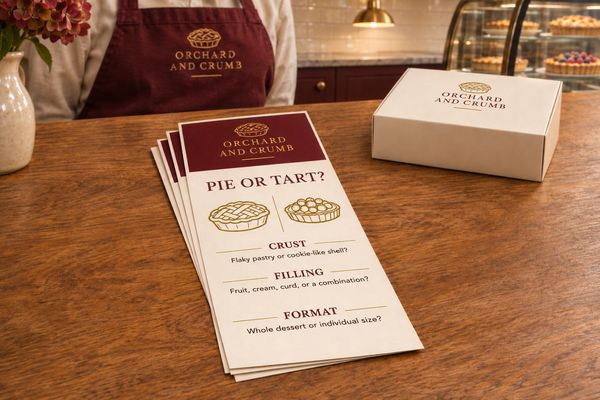
Keep the guide short and specific
Use your logo, three buying questions and a clear route to the current menu. DecentCustom’s listed rack card size is 3.74 × 8.27 inches, with 14pt standard cardstock and glossy finish as default options. Other stock and finish combinations have their own specifications.
Confirm the selected stock, finish, artwork, trim and bleed requirements before ordering. This is a flat paper card; no display holder is listed in its package. Keep time-sensitive availability in your current menu or order confirmation.
Explore related custom marketing materials or other custom products from DecentCustom after deciding what information your customers actually need.
Questions customers ask about pies and tarts
Does a pie have to have a top crust?
No. Pies can have exposed filling, lattice or a full top crust. A missing lid does not automatically turn a pie into a tart. Ask about the actual shell, filling and format when choosing from a bakery menu.
Does “tart” mean the dessert will taste sour?
The dessert category name does not tell you how sour or sweet its filling will taste. Ask which fruit, cream or curd is used and how the bakery describes that particular item. Choose by that description and your preferences.
Are tarts just small pies?
No. A tart can be bite-sized, individual or full-sized, and pies can be miniature. Ask for the actual dimensions and whether you are buying a whole dessert, a slice or an individual piece. Then decide how it will fit your serving plan.
Research note: an original September 2024 home-baking question helped identify confusion over pans and dessert names. It is qualitative context, not a survey of bakery customers. Sources and the product listing were checked November 7, 2026.