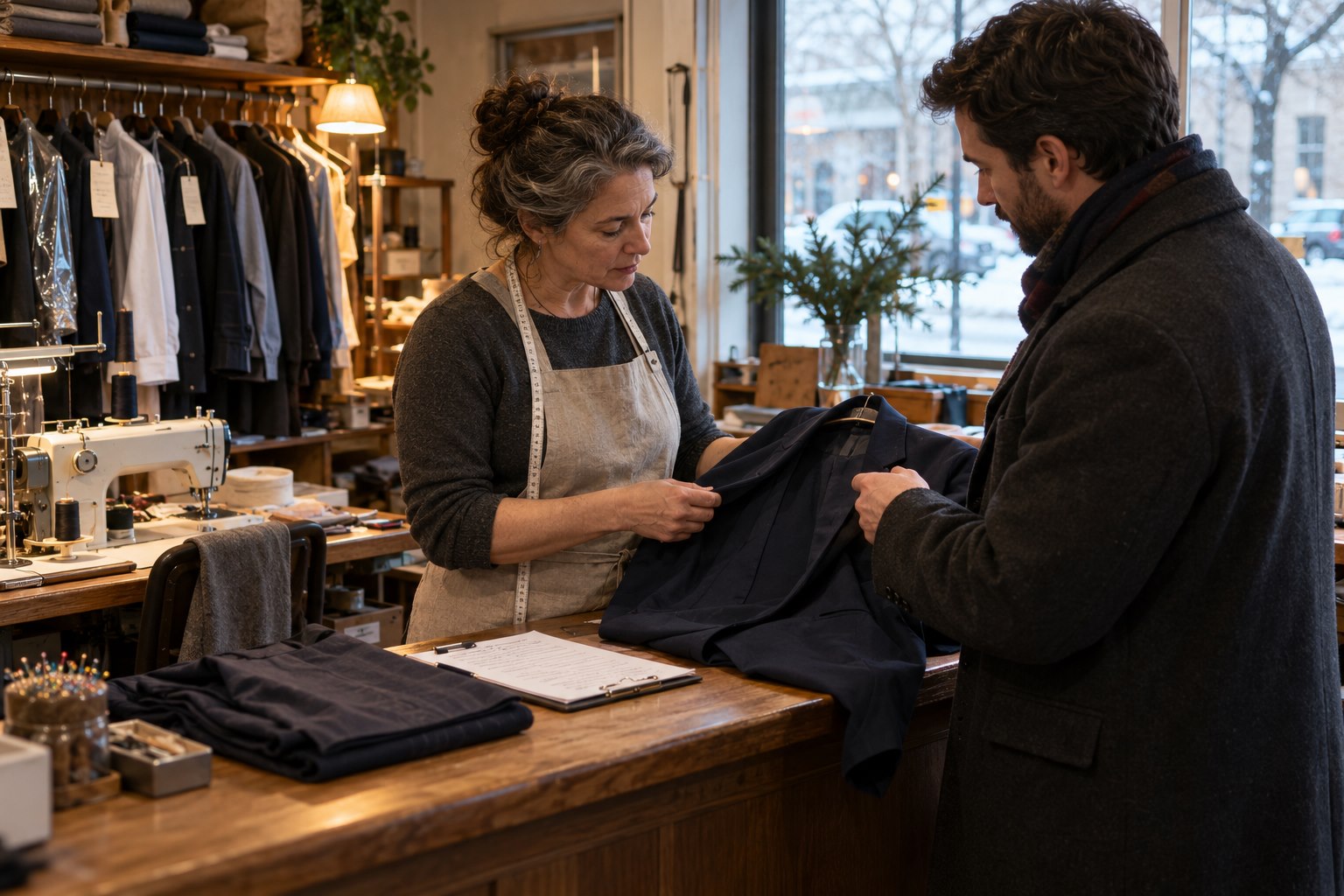

A practical holiday-season guide for tailoring and alterations businesses: protect sewing time, prepare customers for fittings, and make every pickup easier to manage.
The customer gives you an event date. Your job is to turn it into a production plan: inspect the garment, agree the work, allow for fittings and confirm a pickup the shop can deliver. During the holiday season, a vague promise at intake can become a problem on an already crowded rail.
Preparing your tailor shop for the holiday rush starts with the work you can finish, the information customers need, and the way completed garments leave the shop. Custom-printed materials earn their place when they support one of those tasks.
What year-end actually means for a tailoring business
Holiday parties, winter wardrobes and travel can put a fixed deadline on otherwise ordinary alterations. Shop closures and customers’ own travel plans can also compress the time available for fittings and pickup. A request for “before Christmas” needs a specific agreed date before it belongs in the work queue.
The pressure differs by business. A custom tailor may be coordinating fabric choices, a new commission and several fittings. An alterations shop may be balancing hems, repairs, suit adjustments and more involved formalwear. Neither should assume that every December will be its busiest month; the useful guide is its own bookings, unfinished work and local customer needs.
That distinction matters financially, too. More garments on the rail also mean more work still to complete. Review open jobs, money still to collect and supplies tied up in those orders before adding a large seasonal purchase. If the schedule is already full, clearer service boundaries may be more useful than another promotion.
What a tailor shop owner manages from opening to closing
The visible service is the alteration or finished garment. Behind it is a chain of decisions, conversations and checks. Use the sequence below to find where your own day gets interrupted.
Before opening: review promised pickups, fittings, unfinished work and missing materials. Decide what needs uninterrupted sewing time and what is waiting on a customer decision.
At intake and fittings: inspect the actual garment, understand the desired fit, record the agreed work, explain the estimate and check the deadline. A photograph alone may leave construction details unresolved.
During production: cut, stitch, repair, press and coordinate work while answering questions and handling arrivals. Keep the job record with the workflow so the next interruption does not erase an earlier decision.
At pickup: check the work, arrange any final fitting, return the correct pieces together and explain the next step. Complete the transaction under your own payment policy.
Before closing: update job status, follow up on uncollected orders, reconcile the day’s records and prepare the next day’s work. Ordering supplies, staffing and customer communication are part of the business, too.
1. Agree on the deadline before accepting a rush order
“When do you need it?” is only the first question. Ask when the garment will be worn, when the customer can return for a fitting, and when it must be collected before travel or a shop closure. Those may be three different dates.
Then assess the work against capacity already committed. A rail of straightforward hems and a rail of lined jackets can contain the same number of orders and represent very different workloads. Leave room for checking the result and resolving a fitting issue before promising collection.
Keep the agreed work, fitting arrangements and pickup date in one reliable job record. If the original plan changes, update that record and confirm the change with the customer.
Wording to adapt at the counter: “Let us check the garment and your fitting availability before we confirm the pickup date.”
2. Give customers fitting instructions they can act on
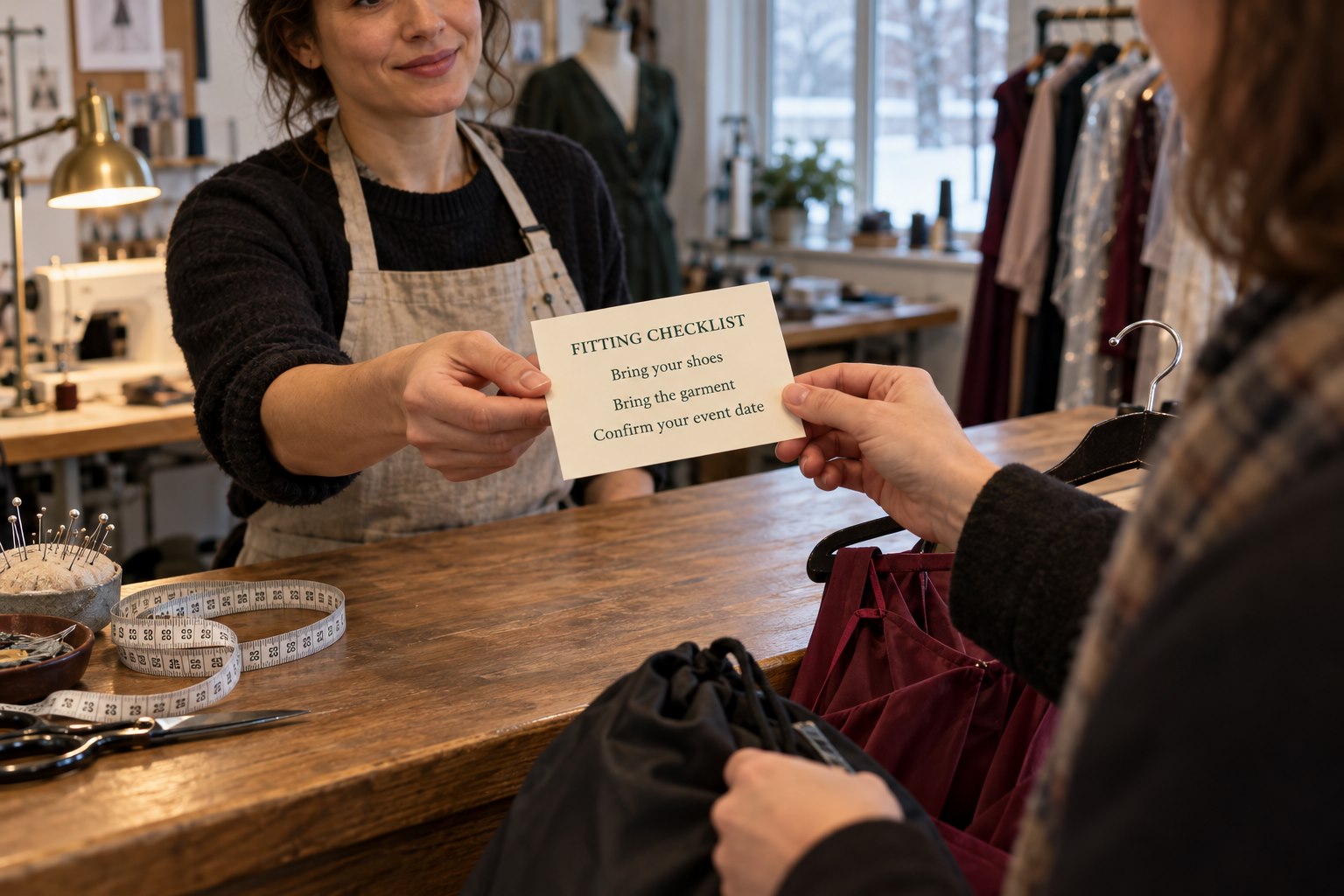
A fitting slot is more useful when the customer arrives with what the work requires. For a hem, that can mean the shoes intended for the outfit. A formalwear fitting may also depend on the undergarments or accessories that affect fit. State the preparation for the actual service rather than handing everyone the same long checklist.
Put the essential instructions into the booking message and, where useful, a small printed card the customer can keep. A simple fitting card needs the shop name, what to bring, how to contact you and the next agreed action. Check the wording against the way your shop really works.
Custom printed postcards for fitting instructions provide room for a short checklist without crowding a business card. If staff will write a date or note on the card, confirm a suitable finish and test the intended pen before ordering.
Before your fitting
Bring the garment and the shoes you plan to wear.
Bring any undergarments or accessories relevant to the fit.
Tell us your event and travel dates when booking.

Custom printed postcards for fitting instructions
A larger format for fitting preparation and other take-home instructions.
Click image or product name for details ↗
3. Answer one recurring counter question in the right place
Customers need to know how fittings are arranged, what happens when work is ready, and how holiday hours affect collection. When the same question keeps interrupting production, look at where that information is available.
A custom table tent for your shop counter can carry one stable instruction where customers wait or pay. An appointment-only shop might explain how to book; a walk-in shop might explain its intake process. Use the arrangement you actually offer.
Make the main message readable from the customer’s position. Keep frequently changing dates on a replaceable notice or an up-to-date webpage. If you include a QR code, send it to the precise booking or information page and test the printed code. A general homepage leaves the customer with another search to do.

Custom table tents for your shop counter
A standing display for a concise service or booking message.
Click image or product name for details ↗
4. Match the finished garment, the job record and the packaging
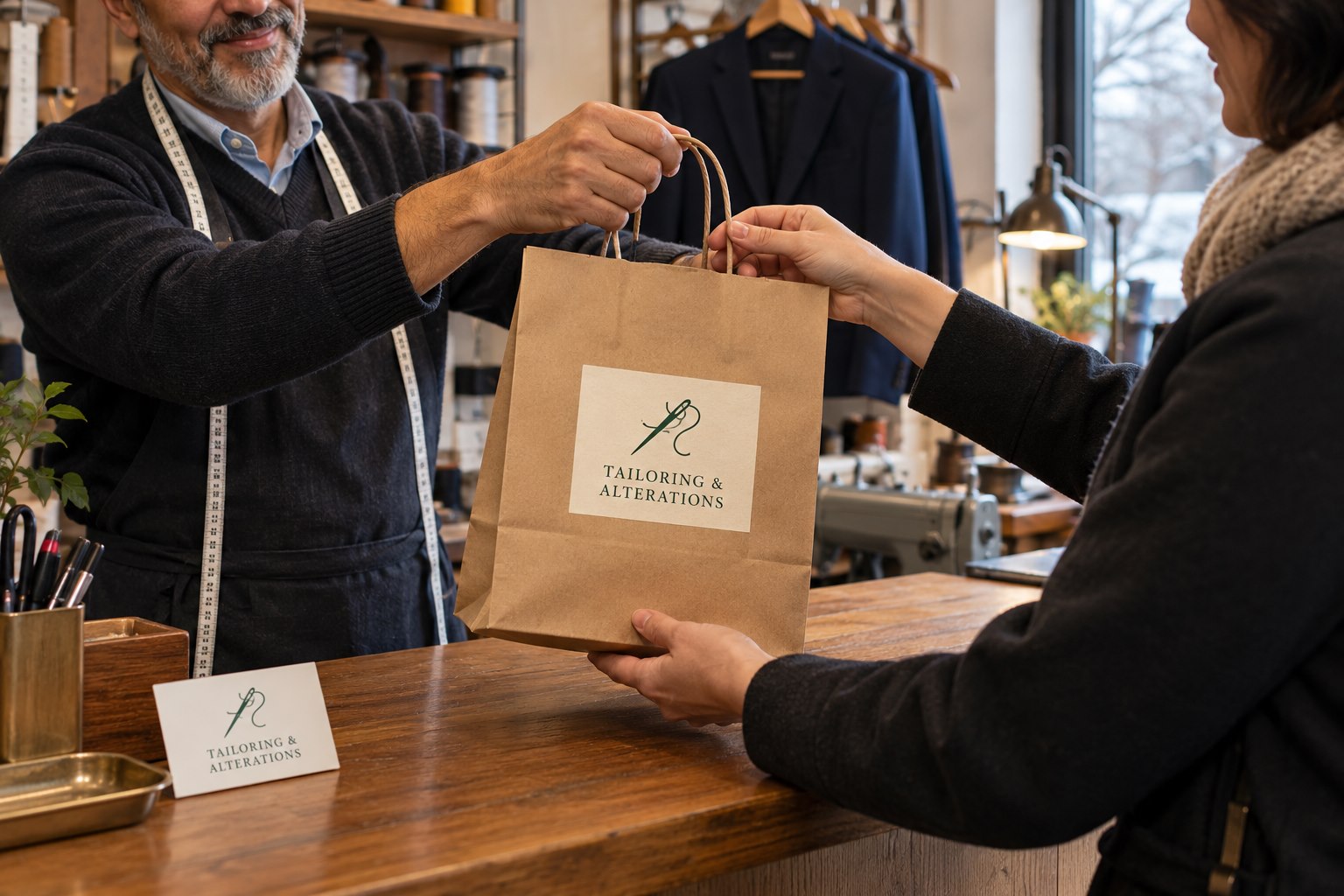
At pickup, the customer sees the work as a whole: the fit, the explanation and the way the garment is returned. Before packaging it, check the agreed alteration, any outstanding fitting and every piece belonging to the order. A branded bag should support a finished handoff, not disguise an unfinished check.
For suits, coats and suitable formalwear
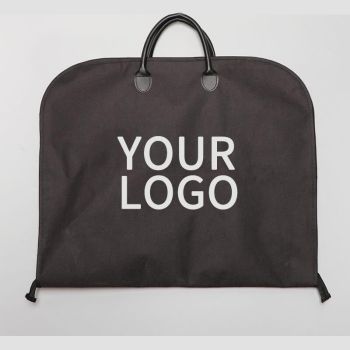
Custom garment bags with your logo can give suitable hanging garments a recognizable carrier beyond the shop counter. The linked polyester style has a zipper, a top hanger opening, carry handles and a clear card pocket. That pocket can hold an order reference tied to your existing job record.
This particular bag is listed at 24 inches wide by 54 inches high. Compare those dimensions with the garment’s length, shoulder width and bulk. It will not be the right format for every long dress or outfit. The listed structure helps you choose; it is not a substitute for checking fit.
Custom polyester garment bags with logo
Foldable polyester style with handles and a clear card pocket; check garment fit.
Click image or product name for details ↗
For smaller jobs and packaging you already use
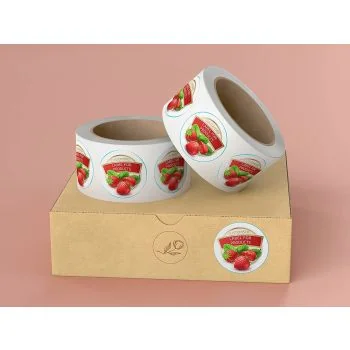
A simple repair or trouser hem may not call for a new garment bag. If the existing packaging works, custom paper labels for garment packaging can add the shop name and a clear contact route to the outer bag or box.
Choose the label size around the available space, and check adhesion on the intended surface. Keep paper labels on the packaging rather than the garment. They are not washable clothing labels, and they do not change the bag’s protective properties.
Custom paper labels for packaging
Shop identification for suitable existing outer bags and boxes.
Click image or product name for details ↗
5. Make the next useful contact easy
A satisfied customer may remember the fit more clearly than the shop’s exact name or booking instructions. A small contact card gives them the details they need when another garment needs work or a friend asks for a recommendation.
Custom business cards for tailors and alterations shops should lead with the service you want to be known for: suit alterations, everyday repairs, bridal work or custom clothing. Follow with the business name and one clear contact or booking route. Give a home-based studio’s appointment method rather than assuming customers should arrive unannounced.
Use the card selectively at pickup or through a relevant retail partner who has agreed to display it. If you are fully booked, keep the message aligned with the work you can accept. The goal is a clear, appropriate inquiry rather than simply more inquiries.
Custom business cards for tailors
Service and contact details customers can keep or pass to a friend.
Click image or product name for details ↗
Which custom product should your shop choose first?
Choose the item that addresses a repeated moment in your day:
- Customers arrive unprepared: start with clear fitting instructions, then decide whether a printed postcard adds value to your booking message.
- The counter repeats the same explanation: use one concise display message, placed where the question comes up.
- Suitable hanging garments need a carrier: compare a garment bag with the actual clothing you return, including its length and bulk.
- Existing bags work but lack identification: consider an appropriately sized packaging label.
- Customers need a way to return or refer someone: make the contact and service details on a business card easy to use.
Before placing an order, check the current minimum quantity, print area, material or finish, and the total for your selected options. Keep date-sensitive artwork out of a large evergreen print run unless you expect to use it. Confirm the current delivery estimate against the date you actually need the materials.
Questions tailor shop owners ask
Is December always the busiest month for alterations?
No. Formalwear, wedding, school and local event calendars create different peaks. Plan from your own bookings and open jobs. Year-end preparation is still useful when customer travel or shop closures reduce the days available for fittings and pickup.
Can printed fitting cards replace appointment reminders?
A card holds instructions; it does not send a message or confirm an appointment. Use it alongside your existing booking and reminder process, with the same contact details and preparation requirements.
Does every finished job need branded packaging?
No. Match packaging to the garment, the service and your actual usage. A suitable existing bag and a contact card may be enough for one job, while a garment carrier is useful for another.
A workable holiday season depends on promises the shop can keep. Clear fitting instructions, consistent job records and an organized pickup make those promises easier to follow through. Choose custom materials that support the way you work, and let the quality of the tailoring remain the reason customers return.
Product links lead to DecentCustom, our custom-printing website. Product thumbnails come from the corresponding DecentCustom product pages. The three workshop scenes are AI-generated illustrations of fictional people and settings.