
IMPORTED SNACKS · FIND THE PACK YOU REMEMBER
To find an imported snack again, match the full product name, flavor, format and package size, then check the current pack’s stated market or origin information. Bring photographs of the old wrapper’s front and back. A familiar logo, foreign-language label or matching color is a useful clue, but it cannot establish that two packs contain the same product.
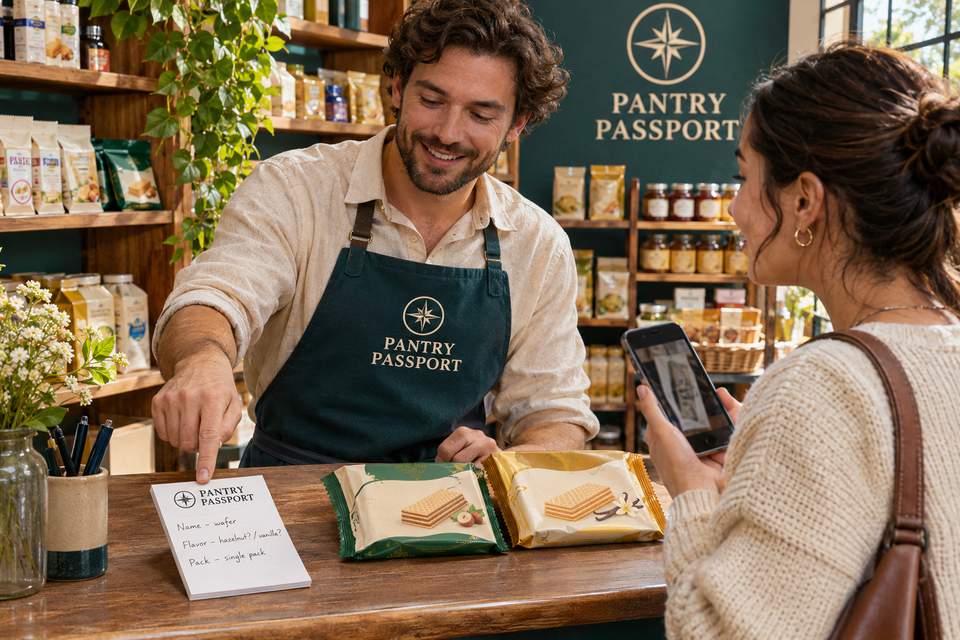
You enjoyed a wafer on vacation. Now the import shop has a similar-looking bag, but the name includes an extra word and the pieces look smaller. Should you buy it? Start by deciding whether you want to recreate a favorite or discover something new. The information you need is different.
A recognizable brand is a starting point
The Pop Snax beginner’s guide to international snacks organizes exploration by format and flavor, with checks for the exact market and package. That approach is useful when browsing an unfamiliar shelf. For a repeat purchase, narrow it further: identify the particular pack instead of choosing another item from the same country or brand.
A brand can cover multiple shapes, fillings and flavors. Nestlé’s global KitKat page, for example, shows different formats and describes Japanese flavors such as wasabi. It also directs readers to local product information. That does not establish which edition an independent U.S. shop currently carries, or whether you will prefer one version.
Four checks before calling it “the same snack”
| Match this | What to compare | If it differs or is missing |
|---|---|---|
| Full name and flavor | Include words such as latte, dark, filled or sour, not just the large brand name. | Treat it as a different candidate until the seller clarifies the exact item. |
| Physical format | Bar, wafer, biscuit stick, soft cake, mini pieces or individually wrapped portions. | Decide whether that texture and format still fit what you wanted. |
| Pack size and contents | Net weight, number of inner packs, and whether the listing is one unit or a multipack. | Ask for the current specification rather than estimating from a photograph. |
| Current market and pack details | The actual manufacturer/importer information and stated origin or market, plus readable back-panel details. | Ask the shop to identify the edition. Language and shop category alone are insufficient. |
“Made in” and “sold for” answer different questions. Record the information actually stated on the pack, rather than turning one country reference into both a manufacturing location and a sales market. A new wrapper design also does not, by itself, prove a new recipe. If the exact formulation matters, compare the current product information and ask the manufacturer about an unresolved difference.
Use taste discussions for questions, not recipe proof
In a discussion about European and U.S. KitKats, a traveler described a strong personal preference and other readers asked about additional markets. That is useful evidence of what shoppers want to compare. It is not an independent formulation analysis or a reason to rank every country’s chocolate.
One reason to check the original source: the Hersheyland page for the 10.78-ounce Milk Chocolate Snack Size bag lists cocoa butter as well as vegetable oil. An online explanation that assumes the U.S. product simply has no cocoa butter is therefore not a reliable account of that listed product. Its page also tells readers to use each package’s current ingredient and allergen information.
The practical lesson is to separate a person’s tasting opinion from a claim about why a recipe tastes different. You can enjoy a comparison without repeating an unsupported ingredient story. This guide does not report our own taste test.
A worked example: matcha is not automatically matcha latte
Fictional shopping example; these are not seller listings. Riley wants a wafer remembered from a trip. The saved wrapper photograph reads “Green Harbor Matcha Wafer,” 45 g, with Japan stated as the country of manufacture. Riley remembers a crisp wafer and wants that specific item again.
- Option A: the shop lists “Green Harbor Matcha Wafer, 45 g,” but the photograph is old and the current pack’s back panel is not shown.
- Option B: “Green Harbor Matcha Latte Mini Wafers, 60 g.” The same brand and green packaging are recognizable, but both the name and format differ.
Riley asks for the current front-and-back pack details for A, rather than assuming the listing photograph is current. In this example, the shop confirms the full name, format, weight and stated manufacturing country against the photographs. Riley chooses one pack of A for the repeat purchase and saves its current identity.
B remains a separate discovery choice, not a substitute quietly treated as identical. If the shop cannot identify A, Riley can wait or consciously try B as something new. Even matching the identifying fields cannot guarantee that a current batch will taste exactly like a travel memory.
Give the shop a question it can answer
“I’m trying to find the Green Harbor Matcha Wafer in these front-and-back photos, rather than the Matcha Latte Mini version. My old pack was 45 g and stated Japan as its manufacturing country. Could you confirm the current item’s full name, format, net weight and stated origin information? Please tell me if the listing photo shows an older pack, or if the available product is a different edition.”
Attach the wrapper photographs privately to your inquiry through the shop’s normal contact channel. A personal flavor memory is helpful context, but it is not something staff can verify from a brand name. If a date, instruction or ingredient statement is unclear, ask for the exact current information; do not fill the gap from another flavor or an automatic translation alone.
Keep a small record for the next visit
Save the current wrapper photos and a short note. For Riley’s fictional choice:
Repeat-buy note: Green Harbor / Matcha Wafer / 45 g / crisp wafer / pack states made in Japan. Shop confirmed current pack against photos. Keep this front-and-back photo pair. Personal note after trying: “This is the format I wanted.” Do not replace with Matcha Latte Mini without asking.
Write “not confirmed” when a field is unknown. Keep your own tasting comment separate from facts printed on the wrapper. A phone album and an ordinary piece of paper are sufficient; the important part is retaining a recognizable product identity.
For specialty shops: make a repeat-buy note easy to keep
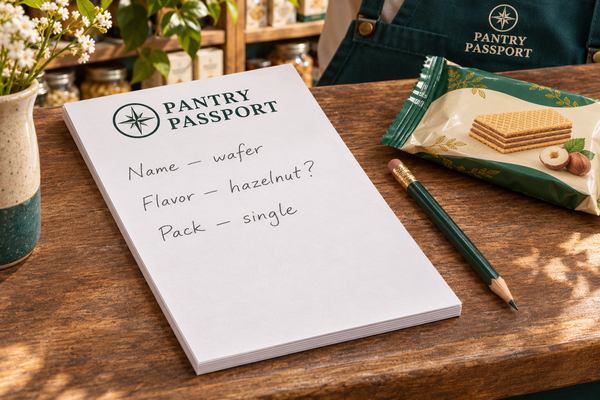
Custom notepads for specialty food stores offer an optional place for staff to write an item name and the customer’s next-visit reminder. The linked DecentCustom pad is 4 inches wide × 6 inches high, with 25 blank paper sheets and a sticky top behind. The illustration shows a logo header and handwriting, rather than claiming a printed form is the default product.
Keep the note beside the customer’s product information. It does not replace the original label, verify a translation or promise that an edition will remain in stock. For other counter supplies, compare custom office and stationery products or explore custom products from DecentCustom after deciding which information customers need to remember.
Imported snack questions, answered
Does the same brand mean the same recipe?
No. Match the full name, format, size and current product details. When a formulation difference matters, ask the manufacturer about the exact edition rather than assuming either sameness or difference from the logo alone.
Does Japanese writing prove a snack was made in Japan?
No. Read the stated manufacturing or origin information on the actual pack. Packaging language, a store’s country collection and a brand’s history do not establish the manufacturing location of every item.
Is a mystery snack box useful for finding one exact favorite?
Only if that specific item is explicitly confirmed as included. For a repeat purchase, an identified individual product gives you a clearer match. A mystery assortment suits discovery when you accept uncertainty about its contents.
What should I do if the wrapper has changed?
Ask whether the current name, format, size or formulation changed too. Compare current information and keep new photographs. Neither a redesigned wrapper nor an unchanged color alone settles whether it is the item you remember.