
SPECIALTY SAUCE SHOPS · A BOTTLE YOU WILL ACTUALLY USE
To choose hot sauce, start with a meal you already eat, the flavor you want to add and a familiar heat reference. Then check the exact sauce’s texture and ingredients. A Scoville number or a row of flame icons cannot tell you whether you will enjoy a vinegary splash, a garlicky drizzle or a fruit-forward condiment. One well-matched bottle can be a better purchase than a large assortment you have no plan to use.
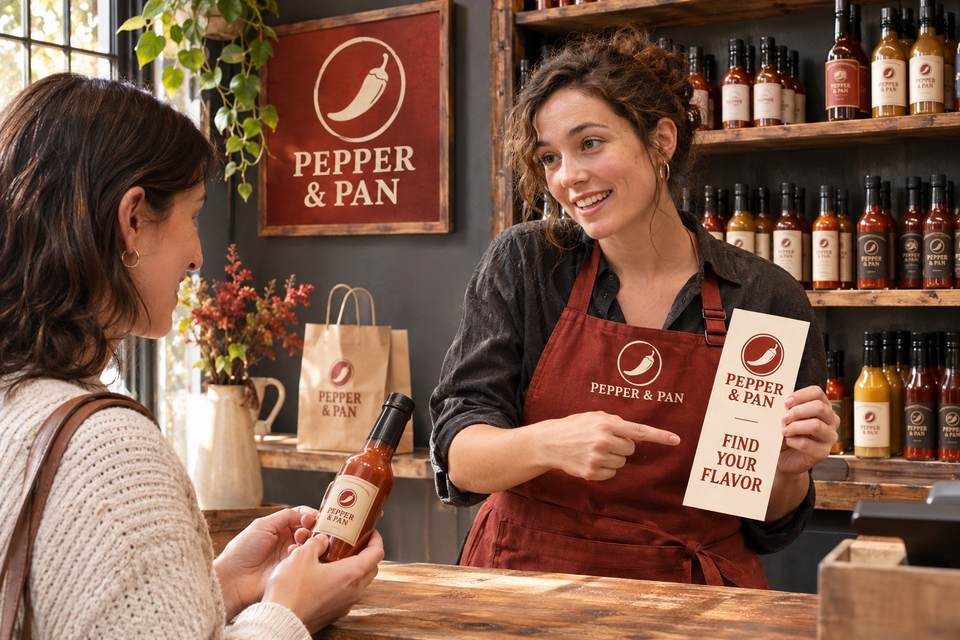
Start with the plate, rather than the pepper name
“I want a good hot sauce” leaves a shop assistant guessing. “I want something for rice bowls, I like garlic, and I dislike a strong vinegar taste” gives them a useful brief. Tell them whether you want to add tang, smoke, sweetness or savory flavor—and which of those you do not want.
The maker’s description can reveal more than the headline pepper. For example, Queen Majesty’s Red Habanero & Black Coffee sauce lists coffee-infused vinegar alongside peppers, onion and garlic. Knowing only “habanero” would miss much of the intended flavor. This is an illustration of reading a specific formulation, not a tasting endorsement or a heat comparison with other brands.
Four flavor directions to discuss in the shop
These are shopping prompts, not rigid categories or guaranteed pairings. A sauce may combine several directions. Use the table to explain the result you want, then read the actual bottle description.
| What you want | What to look or ask for | What to clarify |
|---|---|---|
| A sharp, tangy splash | A vinegar-forward profile and a pourable texture. | Will the acidity complement the dish, or add a sour note you dislike? |
| A savory drizzle | Garlic, onion or other savory notes described by the maker. | How strong is the garlic, and does the sauce also taste sweet or tangy? |
| A smoky accent | A description of smoked peppers or a smoky finished flavor. | Do you want smoke in this meal, and what other flavors accompany it? |
| A fruit-led condiment | The named fruit and the maker’s finished-sauce description. | Is it noticeably sweet, tart or mainly pepper-led? A fruit name alone does not answer that. |
Gindo’s buying guide also separates flavor, heat and everyday use. The useful lesson is to consider all three. It does not follow that everyone should choose medium heat, enjoy garlic on everything or buy several bottles at once.
Use heat information without turning it into the whole decision
Bring the name of a sauce you already enjoy, including the variety. “This bottle is comfortable for me; I want a similar level with less sweetness” is more informative than “I can handle spicy food.” A staff recommendation is still a comparison based on experience, not a promise that two sauces will feel identical to you.
Ask whether a quoted Scoville rating describes the finished sauce or only the pepper used to make it. If the shop cannot establish what the figure refers to, leave it as unknown. You can still compare the maker’s description, ingredients and your familiar reference without inventing a precise ranking.
Flame icons also need context. Heatsupply explains that its five heat categories are its own, informed by experience and differing perceptions. Treat a store’s scale as a guide within that assortment; do not assume another brand’s “medium” means the same thing. There is no need to progress to a hotter bottle if your current one suits your meals.
Check how the sauce will leave the bottle
Picture the action you want: a few drops stirred into a bowl, a ribbon across a sandwich or a spoonful added to a recipe. Look at the bottle opening and the maker’s consistency description. When the package does not make this clear, ask the shop to describe how it pours.
Thickness and heat are separate characteristics. A thick sauce is not automatically hotter, and a thin sauce is not automatically weak. Texture helps you choose how to use the sauce; it cannot settle flavor preference or heat tolerance by itself. For cooking, follow a recipe or the maker’s suggested use rather than assuming any sauce can replace another in the same quantity.
A complete choice: Devon wants one sauce for weeknight meals
Devon regularly eats rice bowls and sandwiches. They like savory garlic, dislike pronounced smoke and already have one sauce whose heat they enjoy. They are choosing between an unfamiliar smoky three-bottle set and a single garlicky sauce.
They give the assistant the exact familiar sauce name and ask about the garlic option’s sweetness, vinegar character and pour. The assistant describes it as a thicker drizzle, but cannot reliably compare its heat with Devon’s reference. Devon does not treat that uncertainty as confirmation. They check the maker’s information and, if the comparison remains unclear, choose a documented alternative closer to the known sauce or defer the purchase.
If the single bottle’s flavor, texture and heat information do fit, Devon buys it and plans to use it first on a rice bowl. The three-pack stays on the shelf because smoke is an unwanted flavor and the extra bottles have no intended meal. This fictional example shows a decision process; it is not evidence that every sampler is poor value.
A question you can use at the counter
“I use this exact sauce comfortably. I’m looking for one bottle for rice bowls and sandwiches, with a clear garlic flavor, little sweetness and no strong smoky note. Which option fits, how does it pour, and what information supports the heat comparison?”
In an older discussion about a hot sauce gift assortment, several commenters found the flavors too similar or vinegar-heavy; others enjoyed the pack or found it useful for discovering preferences. That disagreement is a reason to ask about taste and use, rather than treating bottle count or one enthusiast’s verdict as a universal quality test. The thread is a selected discussion, not a survey of US shoppers.
For sauce shops: give the customer a usable pairing note
A handwritten note may be enough. When staff repeatedly explain the same choices, a short take-home guide can make the conversation easier to remember. Keep product-specific information current and separate from the bottle’s ingredient and storage labels.
Meal: rice bowls and sandwiches.
Wanted flavor: savory garlic; little sweetness.
Avoid: pronounced smoke.
Heat reference: customer’s exact familiar bottle and variety.
Chosen item: record the actual product name after confirming the comparison.
First use: a finishing drizzle on a rice bowl, following that product’s directions.
Those fields support a conversation; a generic printed card should not invent a product selection or promise that every customer shares the same tolerance. Staff can retain the template and provide the final item details separately.
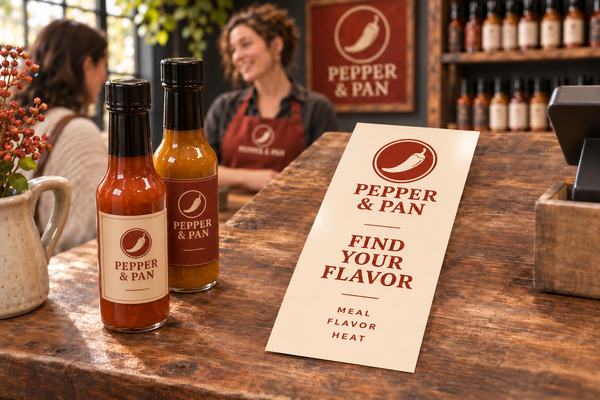
A branded guide customers can take home
Custom rack cards for specialty sauce shops can carry a compact explanation or a link to maintained product notes. DecentCustom’s SKU decentcustom-mm-000007 is a flat 3.74 × 8.27-inch paper card, with standard 14pt stock and glossy finish as default options. A holder is not included in the listed paper-card package.
Use the card on a dry counter or hand it to the customer; it is not a food-contact surface or a replacement for the original bottle label. Explore related custom marketing materials or custom products from DecentCustom when a reusable branded guide fits your shop’s needs.
Hot sauce buying questions, answered
Does the highest Scoville number mean the best hot sauce?
No. Heat information does not describe the flavor you enjoy or the texture you need. Check what the number actually measures, then choose for your meal and a heat reference you know.
Can I compare “mild” or “medium” across brands?
Use those words as the maker’s guidance, rather than a universal conversion. Ask how the exact sauce compares with a familiar bottle and keep uncertainty explicit when the shop cannot make a supported comparison.
Is a thicker hot sauce always hotter?
No. Consistency describes how a sauce pours or sits on food. Read its separate heat and flavor descriptions; do not infer pungency from thickness or color.
What if I dislike vinegar but still want hot sauce?
Tell the shop that sharp acidity is the flavor you want to avoid. Ask for the finished sauce’s flavor description and read the full formulation. The presence of vinegar alone cannot predict how strongly you will perceive it; do not ask staff to guarantee your personal taste.