
A few empty milk bottles can become a confusing return trip: one dairy wants the cap back, another asks you to remove it, and a bottle accepted for collection may not earn a cash refund at that counter. Start with the dairy and the purchase channel, rather than treating every glass bottle the same way.
Identify the brand on each bottle and where you bought it. Check that dairy’s current return instructions and confirm the receiving store or delivery service. Follow the stated preparation and cap rule, retain any required proof or token, and ask whether the deposit comes back as cash, store credit or a delivery-account credit. Do not assume that another dairy’s bottle or a different purchase channel is eligible.
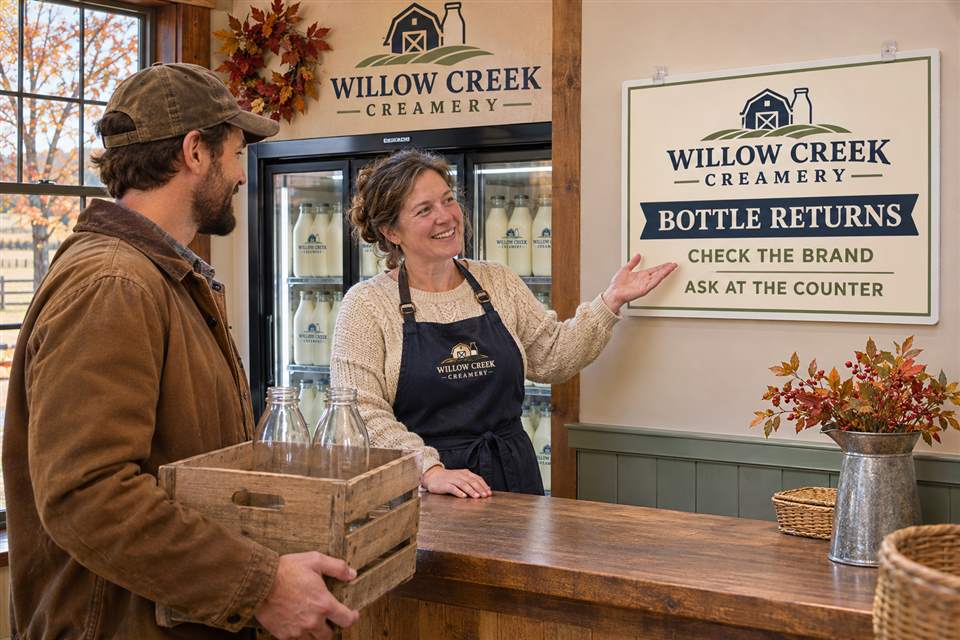
The useful question is where this bottle belongs
In a November 2022 San Francisco bottle-return discussion, a shopper with accumulating milk bottles asked whether they had to visit the dairy itself. Replies mentioned store counters, receipts and different experiences getting returns accepted. Those are old, individual reports—not a current policy for a grocery chain.
The practical lesson is to check the actual destination before taking a large batch. A store selling milk in glass does not, by that fact alone, tell you which brands, purchase channels or refund arrangements it handles. Read the dairy’s instructions, then resolve anything unclear with the receiving location.
Five dairy guides show why one rule is not enough
These examples summarize the named businesses’ published instructions reviewed November 4, 2026. They concern those particular programs, and the receiving location should confirm any uncertain detail. They are not a statement of deposit law or a promise that every bottle will be accepted.
Straus: the cap comes back with the bottle
Straus Family Creamery’s FAQ directs customers to return rinsed milk and cream bottles to a store selling those Straus products. Its cap instructions say to replace the cap before returning the empty bottle for the deposit. A general “remove every cap” reminder would conflict with this program.
1836 Farms: remove the cap and check the brand
The 1836 Farms FAQ tells customers to remove the cap before returning an eligible bottle. It also says the refundable deposit applies to eligible 1836 Farms bottles and that the business cannot accept bottles from other milk brands. A similar shape is not enough to establish eligibility.
Morning Fresh: the purchase channel and token matter
Morning Fresh Dairy’s FAQ separates retail and home-delivery returns. Its on-farm deposit program requires both a bottle and a wooden token for a refund; it describes a trade without the token differently. Confirm the process for your purchase channel before planning the return.
South Mountain: a return can mean delivery-account credit
South Mountain Creamery’s delivery-deposit guide, marked updated July 28, 2025, describes returning reusable packaging for credit to the home-delivery account. It gives collection with a subsequent delivery or return to its Middletown, Maryland farm as routes. That is more specific than assuming cash will be handed over wherever the bottles are collected.
Canon: store credit is the stated return
Canon Creamery’s glass-bottle guide describes a bottle deposit returned as store credit and specifies clean bottles as a return condition. Check the current instructions for your own dairy instead of copying a cleaning method or credit arrangement from a different program.
None of these examples supplies a universal deposit amount, receipt exemption, cap rule or return deadline. Use the brand’s current instructions for the bottle in front of you.
A mixed-bottle return plan, filled in
Here is an illustrative shopper plan, rather than a real customer case. Dana has bottles from different purchases and wants to avoid taking all of them to one farm counter.
Straus bottle bought at a grocery store: Identify the brand, check the Straus return instructions and confirm the receiving store sells the relevant products and can process the return. Follow the stated preparation rule, including replacing the cap.
1836 Farms bottle from another purchase: Keep it separate from the Straus return. Confirm its eligibility and return destination under the 1836 program, and follow the instruction to remove the cap.
Morning Fresh bottle bought at a grocery retailer, with no farm token: Use the retail-return route described in its FAQ. Do not plan on a cash deposit refund at the farm without the required token. Confirm the original retailer’s process before making the trip.
Dana now has separate destinations and known questions, rather than one bag labelled “glass returns.” If a bottle’s brand or purchase route is still uncertain, show the receiving business a clear photo and explain what you know. Leave the refund status unresolved until it is confirmed.
At the return point, ask where to present the bottles before unloading. Check whether the return was processed as the agreed refund or credit. If it was only accepted for collection, ask what that means for the deposit; collection and a completed deposit refund are different outcomes.
Common questions about milk-bottle returns
Should I leave the cap on or take it off?
Use the instructions for that brand and return channel. The Straus and 1836 examples above give different directions. Do not assume a general recycling tip applies to a dairy’s reusable-bottle program.
Can I return a different brand’s bottle to the same dairy?
Ask before including it. Acceptance is program-specific: 1836 Farms explicitly excludes other brands. The fact that two bottles look alike does not confirm that they belong in the same return stream.
Can I get my deposit back without a receipt?
Confirm what proof your program requires. Morning Fresh’s on-farm token arrangement is a concrete example of why a bottle alone may not produce the expected refund. If proof is missing, ask the business to explain the available options; do not assume that a trade, collection or account credit means a cash refund.
For a farm shop: make the first step visible
A useful sign can tell people where to ask before they put bottles down. Keep the detailed, changeable policy available to staff and customers: eligible bottles, purchase channels, preparation, proof and the form of refund or credit. Review it when the program changes.
WILLOW CREEK CREAMERY
BOTTLE RETURNS
Check the brand.
Ask at the counter before unloading.
This is invented display copy, not a real return policy. A shop should adapt it to its actual process rather than print an unverified “all bottles accepted” promise.
An existing notice, ordinary paper or a staff explanation may already be sufficient. If a shop wants a more substantial indoor panel, the material and display arrangement should suit that particular space.
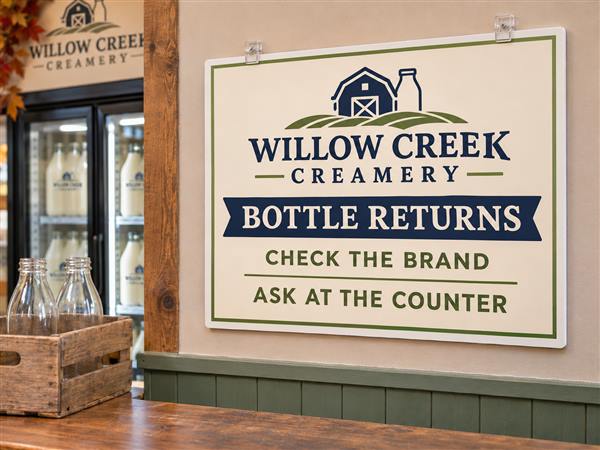
A printed panel for a short instruction
DecentCustom’s custom foam board signs list 5 mm foam, a smooth matte surface and full-color, single-sided UV printing. The page offers horizontal or vertical orientation and a broad 4–100-inch size range.
Confirm the final dimensions, artwork and mounting arrangement before ordering. UV printing describes the listed printing process; this article makes no weatherproof, washable or food-contact claim for the board.
Compare other print formats in custom marketing materials, or explore custom products from DecentCustom for your shop’s broader needs.
The sign’s job is modest: direct the customer to the right conversation. The actual bottle, purchase route and confirmed return policy determine what happens next.